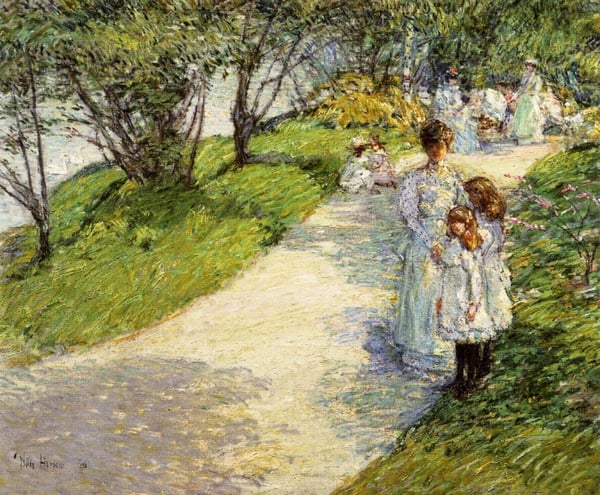
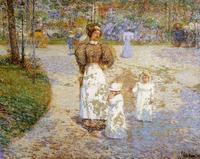
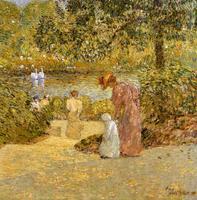
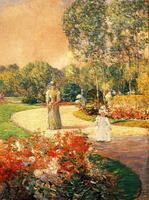
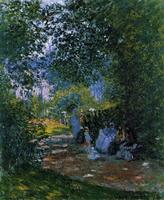
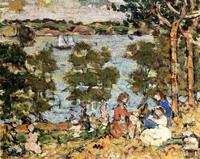
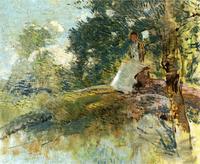
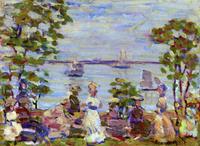
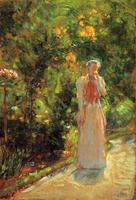
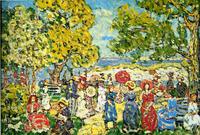
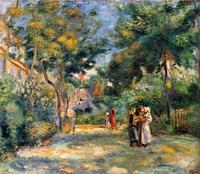
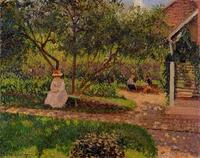
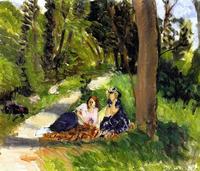
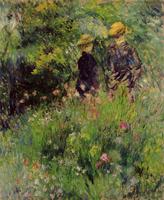
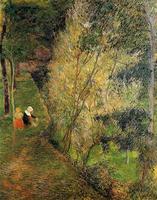
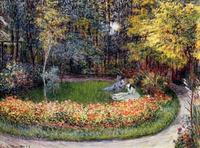
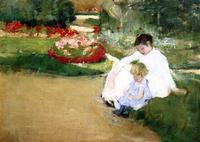
Childe Hassam’s Promenaders in the garden stands as a quintessential example of American Impressionism, a movement that adapted French Impressionist techniques to distinctly American subjects. As a genre painting, it captures a moment of leisurely domestic life—figures strolling through a sun-dappled garden—which aligns with the Impressionist fascination with modern, everyday experiences and the transient effects of light.
What makes this work significant is Hassam’s masterful translation of Impressionist principles onto an American canvas. He employs broken brushwork and a bright, pastel-infused palette to evoke the shimmering atmosphere of a sunlit garden, while the composition’s informal, snapshot-like framing suggests a spontaneous glimpse into a private, genteel world. This painting exemplifies how Hassam, at the height of his career, merged the Parisian avant-garde’s focus on optical sensation with a distinctly American sensibility—celebrating the cultivated landscapes of New England and the leisure of the emerging urban middle class. In doing so, Promenaders in the garden not only demonstrates Hassam’s technical prowess but also marks the maturation of Impressionism in the United States, where it became a vehicle for capturing the optimism and refined outdoor pleasures of the Gilded Age.