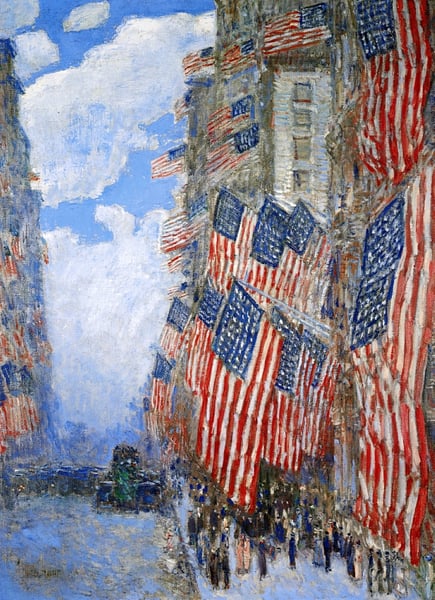
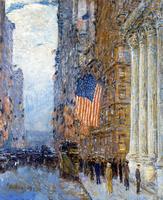
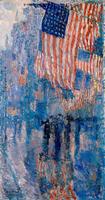
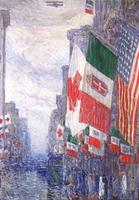
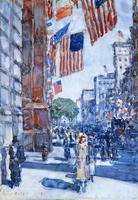
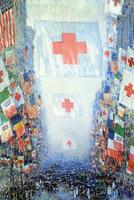
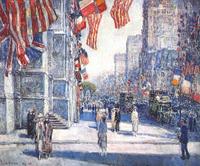
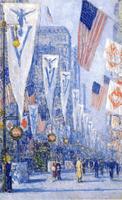
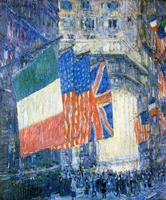
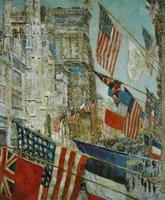
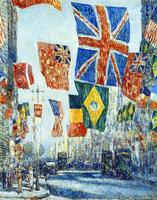
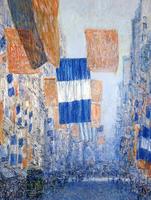
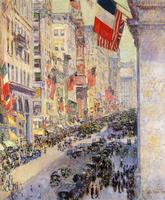
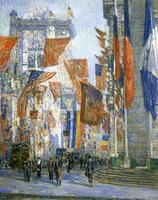
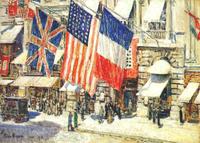
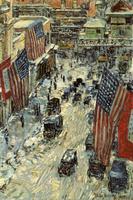
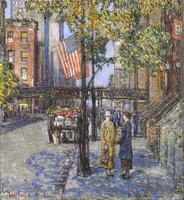
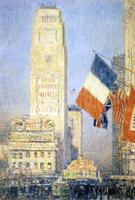
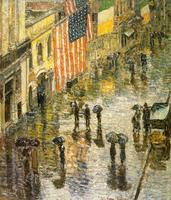
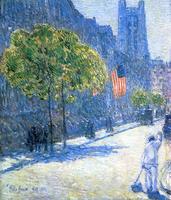
"The Fourth of July" by Childe Hassam is a quintessential example of American Impressionism applied to a celebratory cityscape. Its significance lies in Hassam’s masterful fusion of the ephemeral, light-drenched aesthetic of French Impressionism with a distinctly American subject—patriotic celebration amid urban life. The painting is part of Hassam’s renowned “Flag Series,” created during World War I, which transformed the mundane street into a vibrant, almost abstract tapestry of color and pattern through repeated American flags. Hassam’s loose brushwork and high-keyed palette capture the shimmering atmosphere of a summer holiday, while the rhythmic repetition of red, white, and blue across the composition elevates the scene from mere documentation to a powerful symbol of national unity and resilience. This work stands out for its ability to merge sensory immediacy with patriotic sentiment, making it a landmark in both American Impressionism and the visual culture of wartime celebration.