Konstantin Makovsky sanatçısının Cairene eseri hakkında uzman analizi
Tarz: Romanticism · Tür: portrait
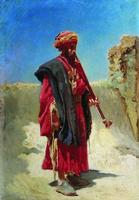
Expert Analysis of "Cairene" by Konstantin Makovsky
Style: Romanticism | Genre: Portrait
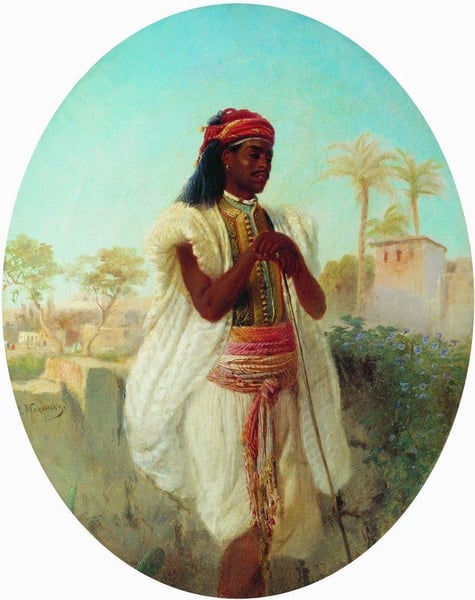
As a work of Romanticism, "Cairene" embodies the movement’s core principles: a heightened focus on emotion, individualism, and the allure of the exotic or distant. The very title—suggesting a woman from Cairo—immediately places the sitter within the Romantic fascination with the Orient, a popular subject for 19th-century European artists seeking to evoke mystery, sensuality, and cultural otherness.
In the portrait genre, Makovsky’s treatment elevates the individual from a mere likeness to a vessel of narrative and mood. The Romantic style emphasizes dramatic expression, rich color, and meticulous detail—likely here used to render luxurious fabrics, jewelry, or architectural elements that reinforce the exotic identity. The significance lies in how this portrait bridges Russian Romanticism (Makovsky was a leading Russian painter) with Orientalist themes, capturing both the artist’s technical virtuosity and the period’s appetite for imaginative, emotionally charged representation.
Ultimately, "Cairene" is significant as a Romantic portrait because it transforms a specific subject into a universal symbol of beauty, mystery, and the Romantic yearning for worlds beyond the familiar.
Görsel olarak benzer
İlişkili kompozisyon ve renk paletine sahip 20 eser
Syrian Sheik, Egypt
John Frederick Lewis
Dervish
Konstantin Makovsky
Palace guard, Granada
Edouard Frederic Wilhelm Richter
The English General’s Syces
Elizabeth Thompson
Servants at the Gate
Elizabeth Thompson
Cairene
Konstantin Makovsky
The Harlot of Jericho and the Two Spies
James Tissot
Этюд мужчины
Arshak Fetvadjian
Moroccan soldier
Marià Fortuny
Dancers
Nasreddine Dinet
Harem Guard
Rudolf Ernst
The Inspection
Ludwig Deutsch
The Moorish Chief
Eduard Charlemont
Guard Corps in Orient
Alexandre-Gabriel Decamps
Portrait of an Arab
Horace Vernet
Moorish Guard
Edwin Lord Weeks
Reception Of An Emir
Gustave Boulanger
The Conversation
Giulio Rosati
After good luck
Vasily Vereshchagin
The Nargilah Smoker
Rudolf Ernst