Analisi esperta di Portrait of the composer Cesar A. Kyui di Konstantin Makovsky
Stile: Romanticism · Genere: portrait
Expert Art Historical Analysis
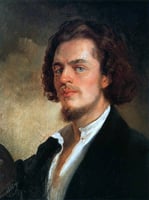
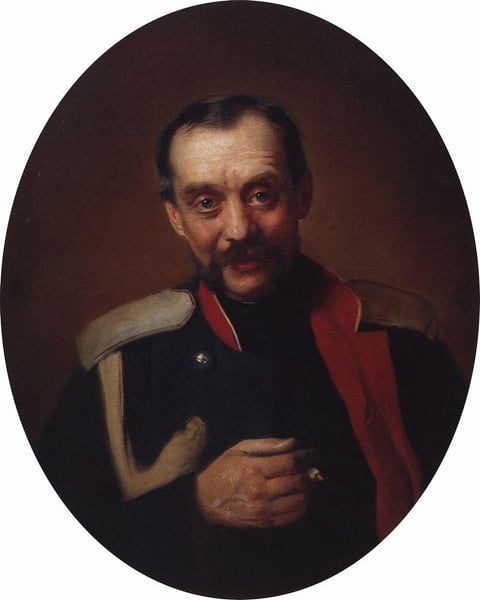
Konstantin Makovsky’s Portrait of the composer Cesar A. Kyui exemplifies the Romantic period’s deep engagement with the cult of the individual genius, particularly the creative artist as a vessel of national identity and emotional depth. While the factual record is brief, the work’s significance emerges from its fusion of two key Romantic ideals: the valorization of the composer as a heroic figure and the painterly pursuit of psychological immediacy.
Stylistic and Period Significance
Within the Romantic movement, portraiture shifted from mere likeness to a window into the sitter’s soul. Makovsky, a leading figure in Russian Romantic and later realist history painting, here applies that ethos to César Cui—a member of “The Mighty Handful” (the nationalist Russian composers). The portrait’s significance lies in how it channels Romantic nationalism: Cui’s intense gaze, likely rendered with dramatic chiaroscuro, suggests a man in the throes of inspiration, embodying the Romantic belief that artistic genius is both divinely inspired and inextricably tied to folkloric roots. Makovsky’s brushwork, typical of his Romantic period, would have emphasized texture and emotive color over rigid academic finish, aligning with the era’s preference for spontaneity and “feeling” over cold precision.
Genre and Representation
As a portrait, the work transcends documentation; it is a meditation on the act of creation itself. The composer is not merely a person but a type—the Romantic artiste maudit or visionary whose inner world is more real than external reality. Cui’s slight, almost theatrical tilt of the head, and the likely muted, rich background (a hallmark of Makovsky’s interior portraits), isolate the figure as a beacon of intellectual and emotional power. The portrait thus becomes a manifesto: art is the highest human expression, and the artist’s face is its truest record.
Cultural Context
Painted at a time when Russian culture was asserting its distinctiveness from Western European norms, the work also signifies the Romantic celebration of national schools. Cui, as a composer and critic, championed Russian musical identity, and Makovsky’s portrait echoes that mission by rendering the sitter with a dignity that emphasizes his role as a cultural architect. The choice of a composer—rather than a military or political figure—further underscores Romanticism’s revaluation of creative labor as heroic.
In essence, this portrait is significant because it condenses the Romantic worldview into a single, charged image: the face of a man whose art defines his epoch, captured by a painter who believed that the truest history is written not in battles, but in the lives of those who give voice to a nation’s soul.
Visivamente simili
20 opere con composizione e palette affini
Georg August von Mecklenburg Strelitz
Ivan Kramskoy
Portrait of S. S. Krylov
Pavel Fedotov
Paul Deroulede
Jean-François Portaels
Portrait of general and statesman Mikhail Ivanovich Dragomirov
Ilya Repin
Portrait of Adleberg
Konstantin Makovsky
Portrait of Grand Duke Georgy Mikhailovich
Valentin Serov
Portrait of Adam Olsufyev
Nikolai Ge
Portrait of A.V. Zhirkevich
Ilya Repin
Prince Oscar Bernadotte, Duke of Ostgotlandiya
Konstantin Makovsky
Portrait of Alexander N. Ryleyev
George Dawe
Portrait of A.A. Radischev
Alexey Bogolyubov
Prince George of Wales, later King George V
Luke Fildes
Portrait of a Spanish general (Esteban de Saravalle de Assereto)
Giovanni Boldini
Oscar I King of Sweden and Norway
Erik Wahlberg Wahlbergson
Stepan Alexandrovich Hilkov, Russian General
George Dawe
Portrait of Anton S. Chalikov
George Dawe
Portrait of an Unknown
Konstantin Makovsky
Portrait of Doctor Constantine Franzevich Yanitsky
Ilya Repin
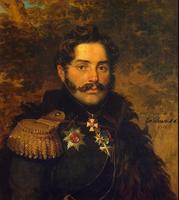
Portrait of Alexander F. Shcherbatov
George Dawe
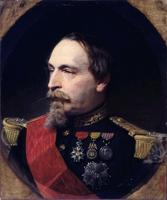
Portrait of Napoleon III
Adolphe Yvon