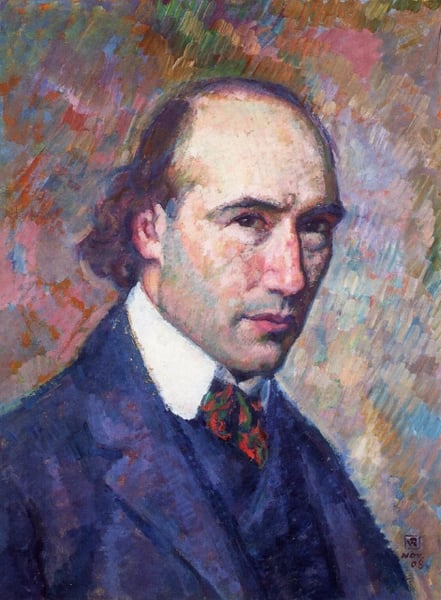
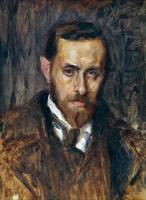
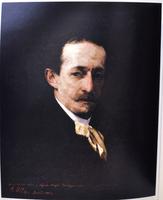
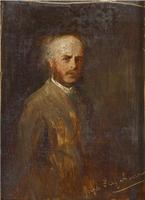
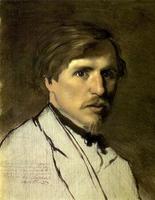
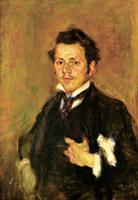
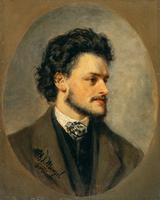
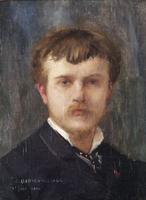
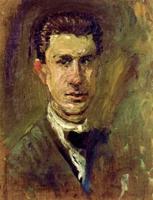
This portrait is a significant example of how Neo-Impressionist principles were applied to the portrait genre within the broader Post-Impressionist movement. By rendering the sitter through meticulous, systematic color division rather than traditional modeling, van Rysselberghe demonstrates that the scientific approach to light and color—characteristic of Neo-Impressionism—can be effectively used to capture both a physical likeness and a psychological presence. The work stands as a key illustration of the period’s ambition to merge objective optical theory with subjective, personal expression, marking a departure from the descriptive naturalism of earlier portrait traditions.