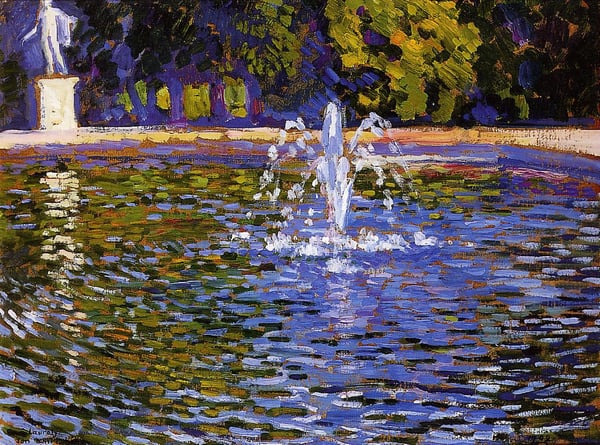
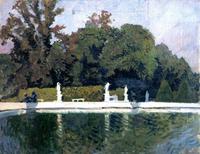
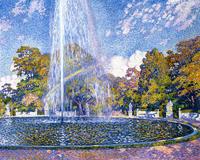
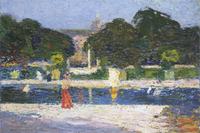
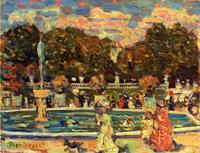
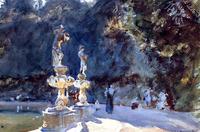
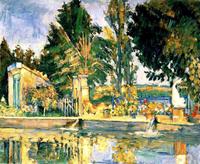
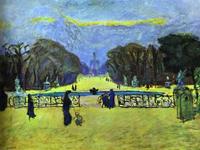
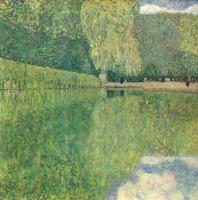
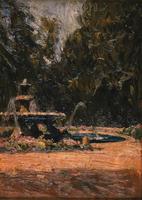
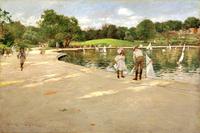
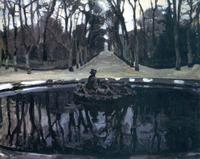
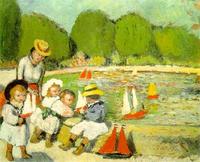
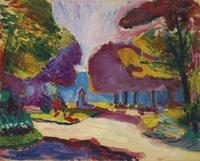
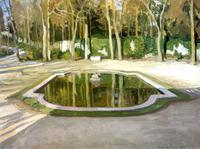
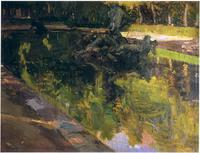
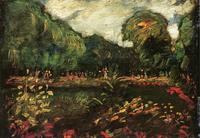
This cityscape by Theo van Rysselberghe exemplifies the Post-Impressionist drive to move beyond naturalistic representation through structured color and light. As a leading figure of the Neo-Impressionist movement, van Rysselberghe applied rigorous pointillist technique to the genre of cityscape, transforming a real location—the fountain in Sanssouci Park, Potsdam—into a shimmering mosaic of pure pigment. The significance lies in his systematic use of small, distinct dots of complementary colors to model form and atmosphere, rather than relying on line or traditional shading. This approach allows the fountain and surrounding architecture to vibrate with optical intensity, capturing the dappled light of a sunlit park while still maintaining the ordered elegance of the 18th-century setting. The work demonstrates how Post-Impressionism, especially its pointillist branch, could elevate a specific urban or park scene into a study of perception and color harmony, balancing the documentary interest of a cityscape with the subjective, emotional resonance of the style. It is a key example of van Rysselberghe’s contribution to the international spread of Neo-Impressionism beyond French borders.