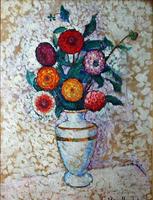
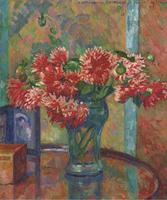
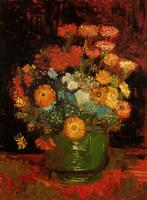
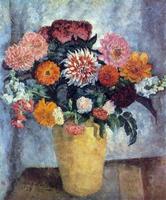
Expert Analysis: "Vase of Flowers" by Theo van Rysselberghe
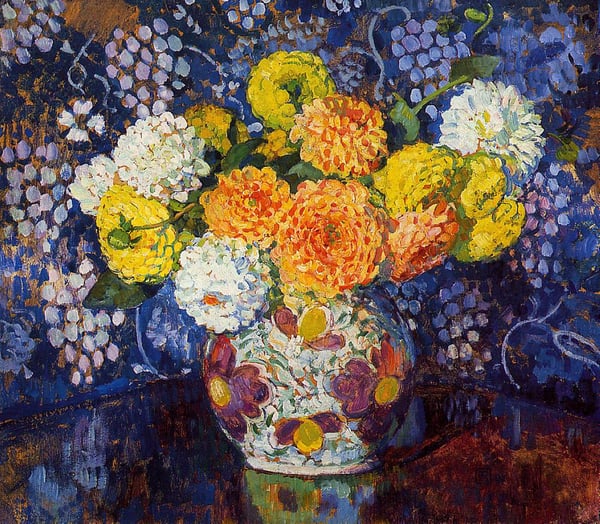
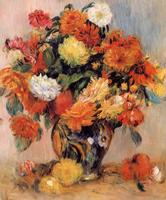
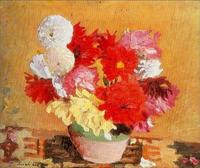
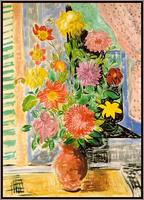
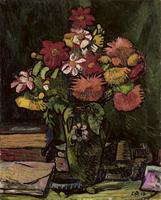
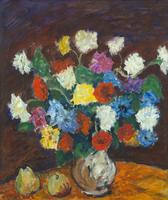
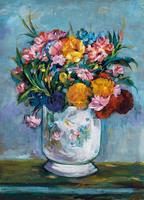
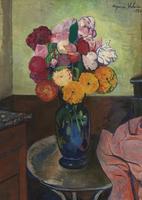
This still life represents a distinctive synthesis of Post-Impressionist color theory and the intimate genre of floral painting. Van Rysselberghe, a leading figure in Belgian Neo-Impressionism, applies the pointillist technique—tiny, separate dabs of pure pigment—to a traditional subject, transforming a domestic arrangement into a vibrant study of light and optical mixing. The significance lies in how he elevates the still life beyond mere representation: each petal and leaf is constructed from systematic, rhythmic touches of complementary colors (e.g., blues alongside oranges, violets against yellows), which the viewer’s eye fuses from a distance into a shimmering, atmospheric whole. Unlike the more systematic pointillism of Seurat, van Rysselberghe’s handling retains a lyrical, decorative quality—perhaps influenced by his exposure to Symbolism and Art Nouveau—giving the flowers a jewel-like luminosity. This work is a testament to how Post-Impressionism expanded the capacity of still life to explore perception itself, bridging rigorous color science with an almost tactile sensuousness. It stands as a refined example of the movement’s core ambition: to push beyond naturalism into a realm where color and form become autonomous expressions of emotion and light.