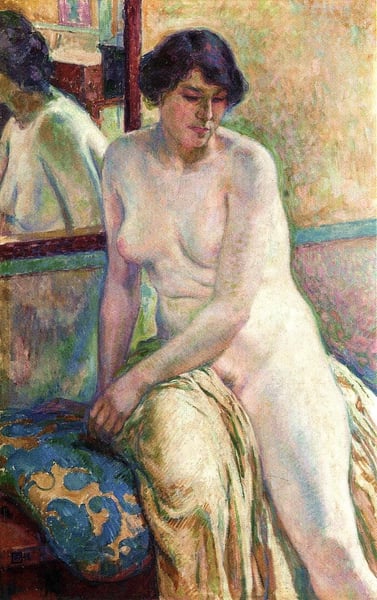
Expert analysis of Theo van Rysselberghe’s Venetian Woman (Marcella)
Style: Impressionism, Neo-Impressionism · Genre: nude painting (nu)
Expert Analysis: Venetian Woman (Marcella) by Theo van Rysselberghe
Theo van Rysselberghe, a leading figure of Belgian Neo-Impressionism, created Venetian Woman (Marcella) at a pivotal moment in his career. This work exemplifies the transition from Impressionism’s spontaneous light effects to the systematic, scientific approach of Neo-Impressionism, particularly the pointillist technique championed by Georges Seurat and Paul Signac.
Significance within Style and Period:
-
Neo-Impressionist Technique: Van Rysselberghe applies meticulous, small dots of pure color—especially in the flesh tones and the surrounding atmosphere—to model the figure. This method achieves a luminous, almost optical blending that captures the soft, diffused light of a Venetian interior. The nude body is not merely a classical form but a study in color harmonies: warm ochres, pinks, and cool blues interlace, demonstrating the Neo-Impressionist belief in color theory as a means to heighten visual sensation.
-
Subject and Context: The title “Venetian Woman” evokes the rich artistic heritage of Venice, a city often painted by Impressionists for its shimmering waterways and exotic allure. Van Rysselberghe, however, updates this tradition by placing the nude in a more intimate, unidealized setting. “Marcella” suggests a named model rather than a mythological or allegorical figure, aligning with the modern, everyday subject matter favored by both Impressionists and Neo-Impressionists.
-
Genre Innovation: As a nude painting (nu), the work challenges academic conventions. Instead of a polished, anonymous Venus, van Rysselberghe presents a woman whose pose and expression carry a quiet, introspective dignity. The pointillist brushwork dissolves the hard outlines of classical drawing, making the figure seem to breathe within a field of light and color. This merging of the figure with its environment is a hallmark of the period’s shift toward a more holistic, optical realism.
-
Artistic Dialogue: The painting stands as a bridge between the fleeting moments of Impressionism and the structured color studies of Neo-Impressionism. It reveals van Rysselberghe’s ability to synthesize the intimate human presence of a portrait with the rigorous, almost scientific deployment of pigment. In doing so, Venetian Woman (Marcella) affirms the enduring power of the nude as a subject for modernist experimentation.
In summary, this work is significant for its masterful use of pointillism to depict the human form, its engagement with Venetian iconography through a modern lens, and its role in advancing Neo-Impressionist ideas about color, light, and representation.
Museum / Gallery
Visually similar
20 works with related composition and palette
Female nude
Joaquín Sorolla
Nude Woman on Green Cushions
Pierre-Auguste Renoir
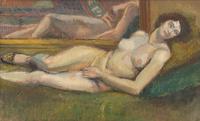
Intimacy
Theodor Pallady
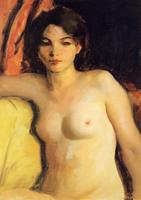
Portrait of Doris Trautman
Robert Henri
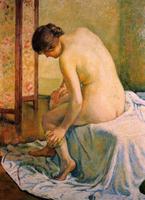
The Bather
Theo van Rysselberghe
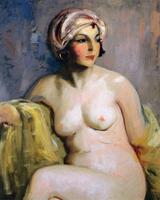
Zara Levy, Nude
Robert Henri
After Bath
Camil Ressu
Seated Nude
Pierre-Auguste Renoir
Nude in a Turban
Henri Matisse
Nude
Pierre-Auguste Renoir
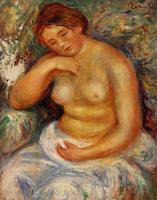
Seated Nude with a Bouquet
Pierre-Auguste Renoir
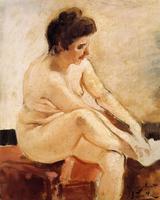
Seated Nude
Joaquín Sorolla
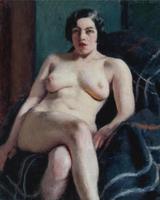
Nude Seated on a Green Rug
Roderic O'Conor
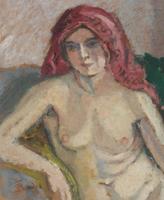
Odalisque
Theodor Pallady
Seated Nude
Pierre-Auguste Renoir
Nude Woman
Theo van Rysselberghe
Seated bather
Pierre-Auguste Renoir
Young Nude Woman
Henri Martin
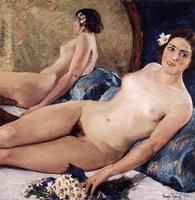
Flora
Igor Grabar
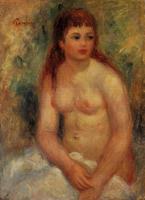
Seated Young Woman, Nude
Pierre-Auguste Renoir