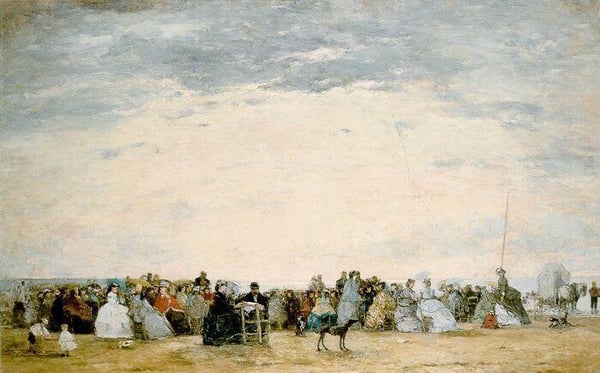
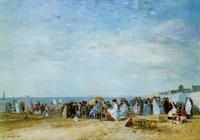
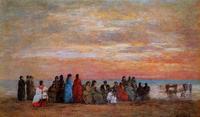
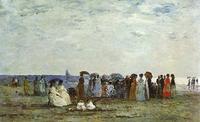
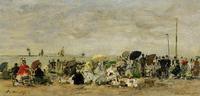
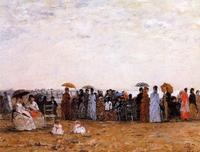
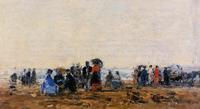
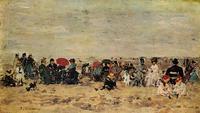
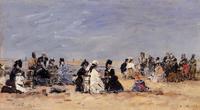
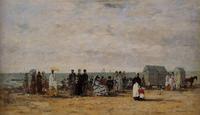
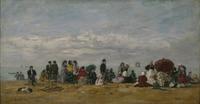
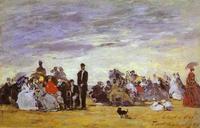
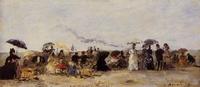
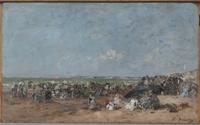
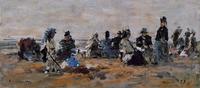
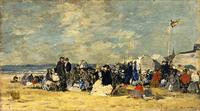
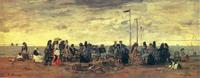
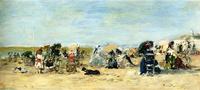
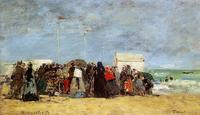
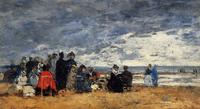
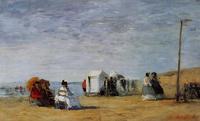
Eugène Boudin’s The Beach at Trouville stands as a pivotal early work within the Impressionist movement, bridging the transition from studio-bound landscape painting to the spontaneous, plein-air observation that would define the era. As a genre painting, it captures a fleeting moment of bourgeois leisure—ladies in billowing crinolines and gentlemen in dark suits dotting the sands, with the sea and sky rendered in rapid, broken brushstrokes. What makes this piece significant is Boudin’s masterful focus on atmosphere and light: the vast, cloud-filled sky dominates the composition, while the figures are treated as vibrant, gestural accents rather than detailed portraits. This approach directly influenced the young Claude Monet, who called Boudin his “master” after working alongside him at Trouville. The painting’s fresh, unposed quality and its insistence on capturing the transient effects of weather and sunlight mark it as a foundational statement of Impressionism’s core ambitions—to record the modern world in all its sensory immediacy.