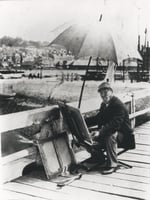
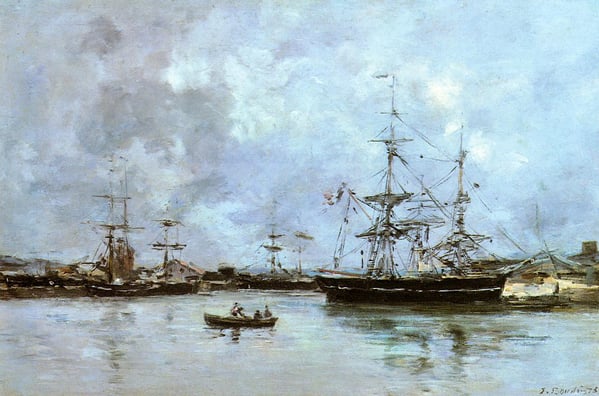
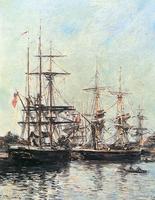
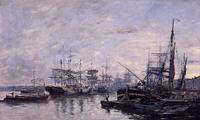
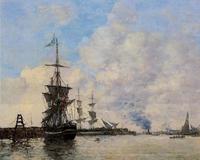
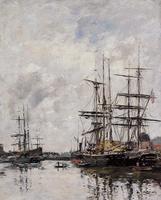
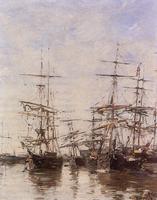
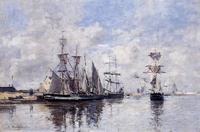
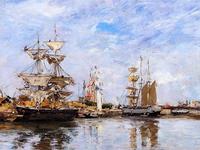
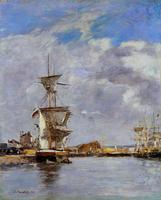
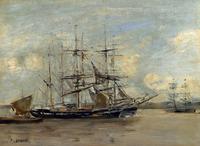
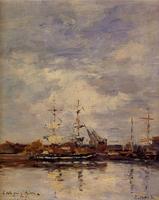
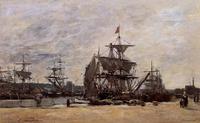
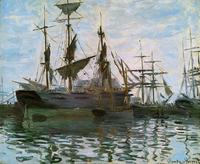
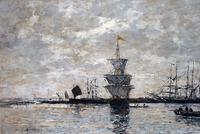
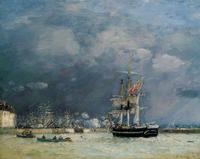
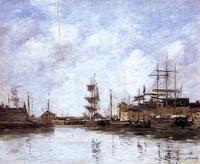
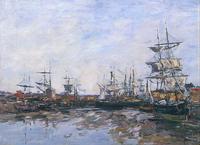
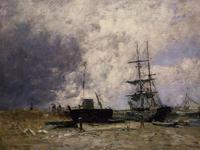
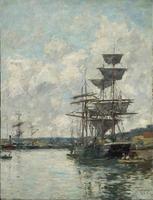
Eugène Boudin's The Port of Deauville is a seminal work within the Impressionist movement, particularly for its treatment of the marina genre. Painted in the 1860s–1870s, the piece exemplifies Boudin's pioneering role as a precursor to Impressionism, directly influencing artists like Claude Monet. The painting's significance lies in its on-the-spot execution (en plein air), capturing the transient effects of natural light and atmosphere over the bustling harbor of Deauville, a fashionable seaside resort. Boudin's emphasis on the shifting sky, the shimmering water, and the casual activity of boats and figures embodies the Impressionist goal of rendering a fleeting moment. As a marina, The Port of Deauville displays Boudin's mastery of marine subjects, where the interplay of clouds, reflections, and the sea becomes a vehicle for exploring color and luminosity. This work is a vital step in the transition from traditional seascapes to the modern, light-filled visions that define Impressionism, making it a cornerstone of the period's radical approach to everyday modern life.