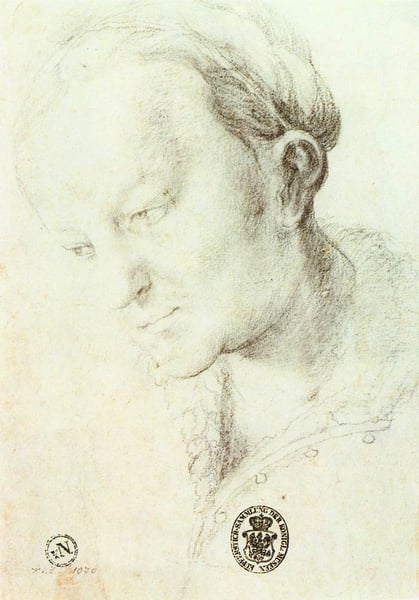
Analisi esperta di Head of a Young Woman di Matthias Grünewald
Stile: Northern Renaissance · Genere: sketch and study
Expert Analysis: "Head of a Young Woman" by Matthias Grünewald
As a sketch and study from the Northern Renaissance, Matthias Grünewald’s Head of a Young Woman offers a rare, intimate glimpse into the working process of one of the period’s most emotionally intense and technically radical artists. While best known for the monumental, agonized vision of the Isenheim Altarpiece, this drawing reveals a softer, more contemplative side of Grünewald’s practice—and it is precisely this tension between sacred suffering and human tenderness that makes his work so significant.
Northern Renaissance Context and Grünewald’s Distinctiveness
In the Northern Renaissance, artists such as Albrecht Dürer and Hans Holbein the Younger prioritized precise linear detail, naturalistic texture, and balanced composition. Grünewald, however, stands apart for his almost expressionistic use of color (in his paintings) and dynamic, searching line (in his drawings). This sketch exemplifies his ability to capture fleeting expression and vitality without the rigid symmetry typical of his contemporaries. The young woman’s face is rendered in swift, confident strokes—some delicate, others bold—conveying both a specific personality and a universal grace.
Significance as a Sketch and Study
Unlike finished altarpieces or portraits, this drawing was likely a preparatory study—perhaps for a saint or a secular figure in a larger composition. Its significance lies in what it reveals about Grünewald’s method: he worked from life, emphasizing psychological presence over idealized form. The subtle tilt of the head, the soft modeling of the jaw and cheekbones, and the ambiguous gaze suggest an artist attuned to nuance. Such sketches were rarely preserved as independent artworks in the 16th century, making this a precious document of Northern Renaissance draftsmanship.
Legacy and Artistic Import
Grünewald’s drawings, including Head of a Young Woman, anticipate later developments in German art—particularly the emotional expressivity that would resurface in Romanticism and early modernism. The work’s blend of naturalism and tender humanity underscores why Grünewald is considered a bridge between the Gothic tradition and the more subjective, psychological art of later centuries. This sketch, though modest in scale, encapsulates his genius for capturing the soul through a few simple lines.
Visivamente simili
20 opere con composizione e palette affini
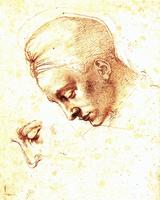
Head
Michelangelo
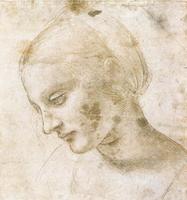
Study of a woman's head
Leonardo da Vinci
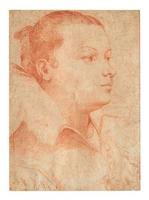
Portrait of a woman bust length looking right
Ludovico Carracci
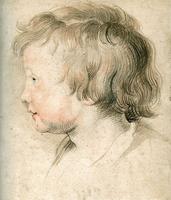
Albert Rubens
Peter Paul Rubens
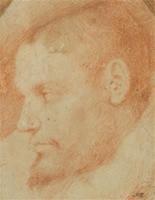
Portrait of a man in profile towards left
Ludovico Carracci
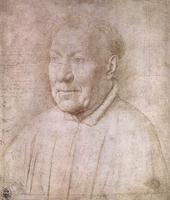
Portrait of Cardinal Albergati
Jan van Eyck
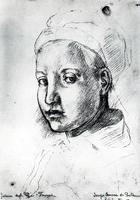
Study from Pontormo
Umberto Boccioni
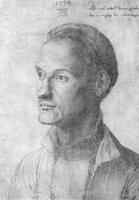
Portrait of Dürer Endres, brother of the painter
Albrecht Durer
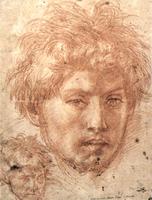
Head of a Young Man
Andrea del Sarto
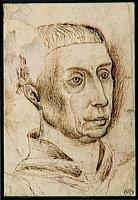
Portrait of Philippe le Bon
Rogier van der Weyden
Study of a Woman's Head
Antoine Watteau
Nicolas Rubens
Peter Paul Rubens
Study of a Boy Turning His Head
Jacopo Pontormo
Head of a Woman
Vincent van Gogh
Self Portrait
Jacopo Pontormo
Female bust
Marià Fortuny
Portrait of Jakob Fugger
Albrecht Durer
Portrait of Annibale Carracci
Annibale Carracci
Portrait of a Papal Legate
Jean Fouquet
Cardinal Mercier
Paul-Albert Besnard