Analisi esperta di The woodcutter di Winslow Homer
Stile: Realism · Genere: genre painting
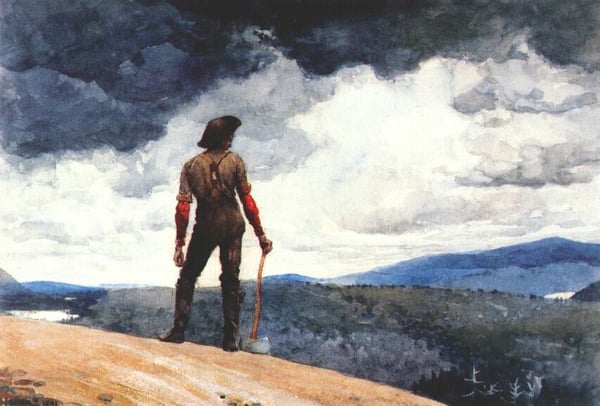
Based solely on the provided structured facts, the significance of Winslow Homer’s The Woodcutter lies in its exemplary embodiment of Realist principles within the genre painting tradition. As a Realist work, it rejects idealized or romanticized subjects in favor of an unembellished, accurate depiction of everyday life—here, the manual labor of a woodcutter. The choice of a humble worker as the central figure aligns with Realism’s commitment to portraying the dignity and authenticity of ordinary people, often those in rural or working-class settings. Within the genre painting category, The Woodcutter elevates a momentary, prosaic task into a subject worthy of fine art, emphasizing the artist’s skill in capturing the physicality of labor and the quiet intensity of the natural environment. This fusion of Realist honesty and genre painting’s narrative focus makes the work a compelling example of how Homer brought a new seriousness to depicting the contemporary American experience.
Visivamente simili
20 opere con composizione e palette affini
The Two Guides
Winslow Homer

Wanderer
Jamie Wyeth
Fishermen O Vaering
Oscar Wergeland
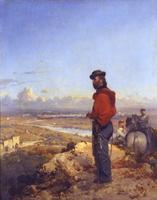
Garibaldi at Sant'Angelo (Capua)
Gerolamo Induno
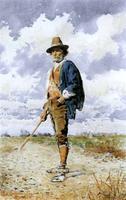
Roman peasant in the landscape
Michele Cammarano

Le Vendéen
Julien Le Blant
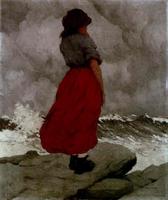
The Watcher
Paul Henry
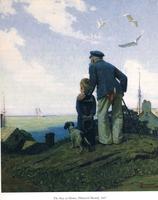
Babysitter
Norman Rockwell
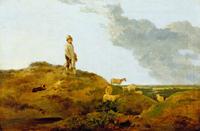
View on Mousehold Heath, near Norwich
John Crome
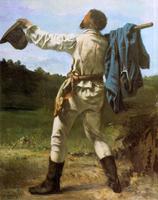
The Homecoming
Gustave Courbet
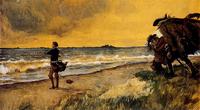
Peter the Great meditating the Idea of building St. Petersburg at the Shore of the Baltic Sea
Alexandre Benois
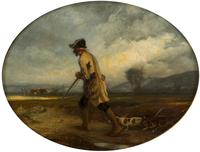
The Hunter
Alexandre-Gabriel Decamps
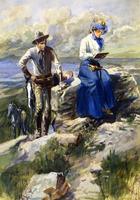
She Turned Her Back on Me and Went Imperturbably On With Her Sketching
Charles M. Russell
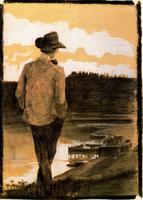
Young Man on a Riverbank
Umberto Boccioni
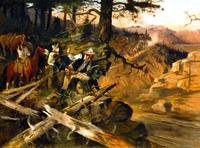
The Ambush
Charles M. Russell
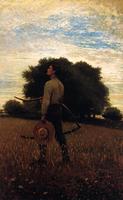
Song of the Lark (also known as In the Field)
Winslow Homer
The halted Pilgrimage (The assistance)
Ferdinand Georg Waldmüller
Puy de Dôme
Jean-Francois Millet
Solitude
Carl Haag
The Wood-boat
George Caleb Bingham