John Henry Twachtman の Arques-la-Bataille の専門的な分析
スタイル:Impressionism · ジャンル:landscape
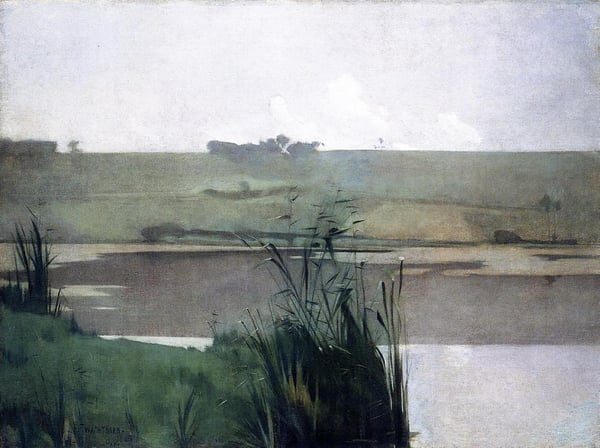
Analysis of "Arques-la-Bataille" by John Henry Twachtman
As an Impressionist landscape, this work embodies Twachtman’s distinct adaptation of the style. While French Impressionists often used vibrant, unmixed color and strong contrasts of light and shadow, Twachtman favored a more subdued, tonal palette and softer atmospheric effects. His landscapes frequently convey a quiet, meditative mood, achieved through delicate brushwork and nuanced color harmonies.
The significance of "Arques-la-Bataille" lies in its demonstration of Twachtman’s move away from the extroverted energy of mainstream Impressionism toward a more introspective, lyrical approach. This painting captures a fleeting moment in nature but emphasizes harmony and calm—a hallmark of his mature work. It also reflects the influence of Japanese aesthetics (asymmetry, understatement) that Twachtman admired, adding a refined simplicity to the scene.
Through this piece, Twachtman helped expand the boundaries of American Impressionism, proving that the style could convey deep emotional resonance and subtle beauty rather than merely documenting optical sensation.
Museum / Gallery
視覚的に類似
構図やパレットが近い作品 20 件
Sedge
Viktor Vasnetsov
Gray day.
Isaac Levitan
Calm summer evening
Isaac Levitan
Landscape
Isaac Levitan
Ставок
Микола Пимоненко
The landscape. The reeds in the river.
Volodymyr Orlovsky
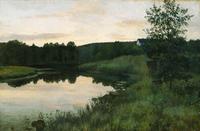
Sommernatt I Sandviken
Kitty Lange Kielland
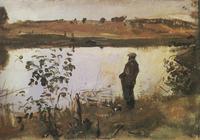
Artist K. Korovin on the river bank
Valentin Serov
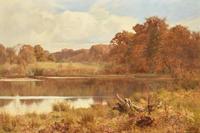
A Silent Pool - Autumn
Edward Wilkins Waite
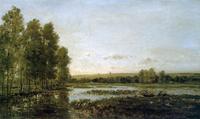
Bords de reviere Sun
Charles-Francois Daubigny
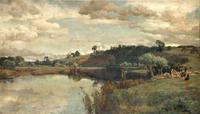
River Scene with a Shepherd and Sheep by a Ferry
Alfred Parsons
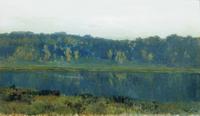
Autumn morning
Isaac Levitan
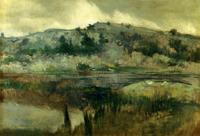
Paradise Rocks, Newport
John Henry Twachtman
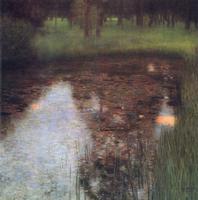
The Swamp
Gustav Klimt
Washerwomen at the Oise River near Valmondois
Charles-Francois Daubigny
A River in England
C. R. W. Nevinson
River
Volodymyr Orlovsky
Chill-October
John Everett Millais
Steppe in the evening
Arkhyp Kuindzhi
Ducklings in a River Landscape
Charles-Francois Daubigny