John Henry Twachtman sanatçısının Snowbound eseri hakkında uzman analizi
Tarz: Impressionism · Tür: landscape
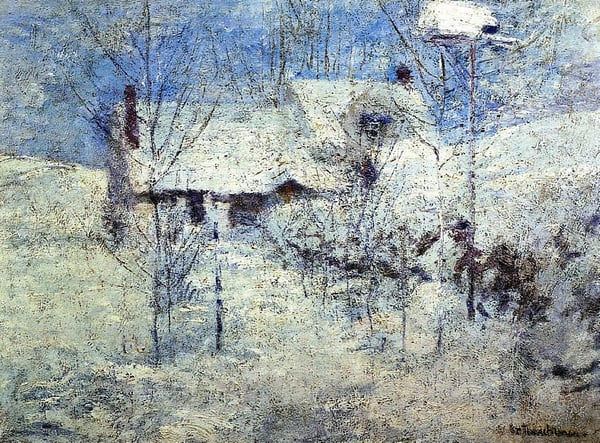
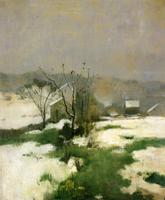
John Henry Twachtman’s Snowbound (c. 1890s) stands as a masterful example of American Impressionism, yet it defies the movement’s typical bright colors and sun-drenched landscapes. Instead, Twachtman’s work is significant for its quiet, tonalist-infused approach to the Impressionist aesthetic—a meditation on winter’s stillness rather than a celebration of light.
Stylistic characteristics:
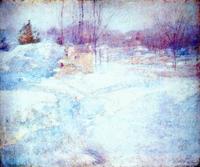
Twachtman renders the snow-covered ground and bare trees with a subdued, almost monochromatic palette of whites, grays, and muted blues. His brushwork is loose and broken, consistent with Impressionist technique, but the overall effect is one of soft, diffused atmosphere rather than shimmering vibrancy. The composition is deceptively simple: a low horizon, a few skeletal trees, and an expansive snowfield that bleeds toward an indistinct sky. The lack of human figures or dramatic weather heightens the sense of solitude.
Significance within American Impressionism:
While French Impressionists like Monet often painted snow with bright, reflective hues (e.g., The Magpie), Twachtman’s Snowbound is part of a distinctly American turn toward introspection. Alongside contemporaries like Childe Hassam, Twachtman sought to capture the mood of the New England landscape. But where others leaned on vivid accents or bustling scenes, Twachtman pushed Impressionism toward what critics have called a “lyrical realism”—an almost spiritual quietude that bridges tonalism and modernism. His snow paintings are less about optical sensation and more about emotional resonance, making them crucial to understanding how American artists adapted Impressionism to express native landscapes and sensibilities.
Why it matters:
Snowbound exemplifies Twachtman’s ability to use Impressionist technique for subtle, elegiac ends. It influenced later American painters who valued atmosphere over anecdote, and it remains a touchstone for the idea that winter—not just spring or summer—could be a subject of profound beauty in Impressionist art.
Görsel olarak benzer
İlişkili kompozisyon ve renk paletine sahip 20 eser
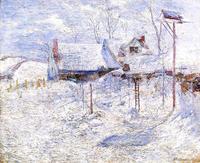
Last Touch of Sun
John Henry Twachtman
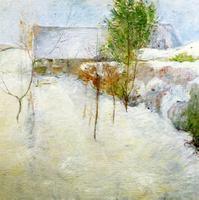
House in Snow
John Henry Twachtman
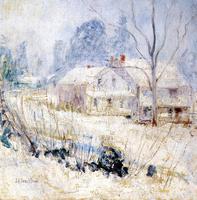
Country House in Winter
John Henry Twachtman
Path in the Snow
Gustave Loiseau
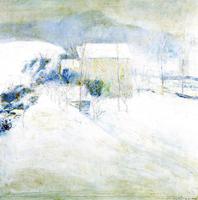
Snow Scene at Utica
John Henry Twachtman
Greenwich Hills in Winter
John Henry Twachtman
Winter Landscape
John Henry Twachtman
Snow Scene
John Henry Twachtman
Winter Landscape
Paul Gauguin
The Road in front of Saint-Simeon Farm in Winter
Claude Monet
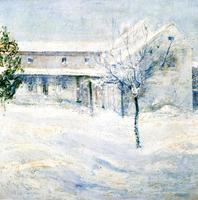
Old Holley House
John Henry Twachtman
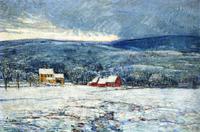
Winter in the Connecticut Hills
Childe Hassam
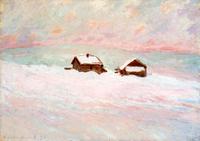
Houses in the Snow, Norway
Claude Monet
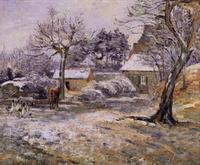
Snow at Montfoucault
Camille Pissarro
Winter
John Henry Twachtman
Snow Effect, Giverny
Claude Monet
Waterloo Place
Robert Spencer
The Entrance to Giverny under the Snow
Claude Monet
An Early Winter
John Henry Twachtman
Landscape
Robert Julian Onderdonk