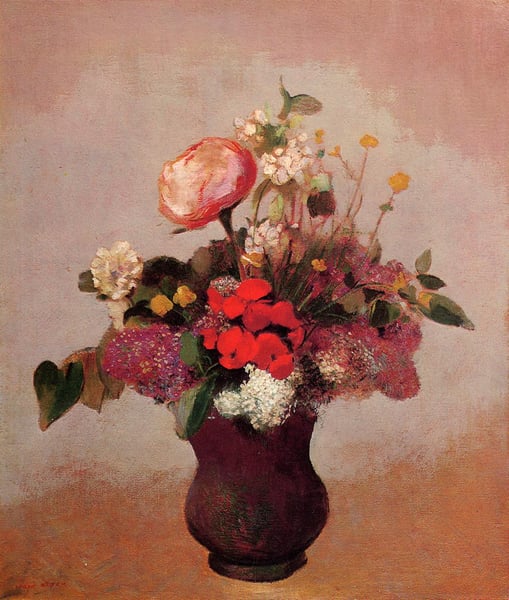
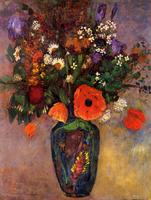
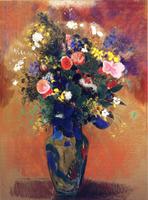
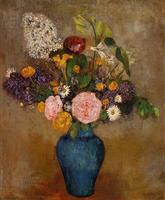
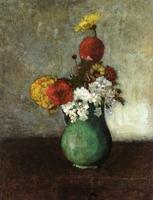
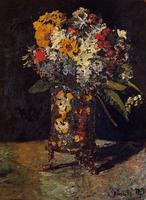
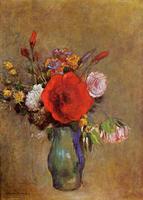
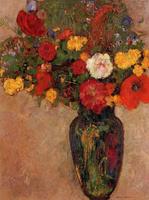
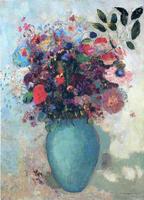
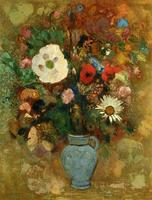
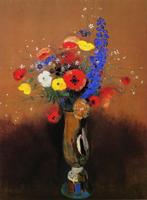
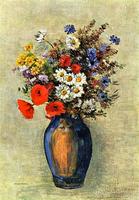
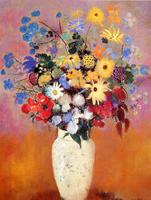
While Odilon Redon is most celebrated for his Symbolist and dreamlike works, his flower painting Flowers in a Brown Vase is a striking testament to his mastery of Realism within the still-life genre. The work’s significance lies in how it captures the tactile immediacy of nature with a precision that rivals the Dutch flower painters of the 17th century, yet imbues the composition with a meditative stillness characteristic of Redon’s evolving practice.
The structured facts indicate the style is Realism, meaning Redon here eschews the fantastical, floating forms of his earlier pastels in favor of faithful observation. The "brown vase" serves as an earthy anchor, grounding a burst of floral color and texture. Each petal and leaf is rendered with meticulous attention—the veining, the subtle shifts from bud to full bloom—creating a sense of living presence. What makes this piece significant within Realist flower painting is Redon’s ability to balance scientific accuracy with emotional resonance: the flowers are not merely botanical specimens but seem to pulse with a quiet, inner life. This work demonstrates that even an artist of the imagination can embrace Realism to explore the profound beauty found in the everyday.