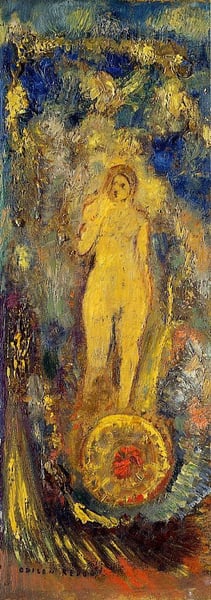
The Wheel of Fortune
Analisi esperta di The Wheel of Fortune di Odilon Redon
Stile: Symbolism · Genere: symbolic painting
Expert Analysis: "The Wheel of Fortune" by Odilon Redon
Odilon Redon’s The Wheel of Fortune is a quintessential work of the Symbolist movement, marked by its rejection of literal narrative in favor of evocative, dreamlike imagery. Executed during Redon’s mature period—when he transitioned from his celebrated noir charcoal “noirs” to luminous pastels and oils—the painting embodies the Symbolist quest to render the invisible: ideas, emotions, and the mysterious forces of fate.
The composition centers on a monumental wheel, an ancient emblem of destiny’s capricious turns. Unlike medieval or Renaissance iterations (where human figures cling to the wheel’s ascent or fall), Redon strips the allegory to its metaphysical core. The wheel floats in an indeterminate, twilight space—neither heaven nor earth—and its spokes radiate a hypnotic, almost cosmic energy. A lone figure, perhaps a traveler or a soul, stands bound to the rim, his posture passive, as if accepting the inexorable cycle of fortune. Redon’s use of color is significant here: muted golds, deep reds, and ethereal blues dissolve into each other, creating a blurred, iridescent atmosphere that suggests the shifting, unstable nature of luck and time.
What makes The Wheel of Fortune pivotal within Symbolism is its rejection of didacticism. Redon does not moralize—there is no triumph or despair, only a suspended, ambiguous moment. This refusal to resolve meaning aligns with Symbolist theory, which held that art should hint at universal mysteries rather than explain them. The painting also marks Redon’s full embrace of color as a carrier of emotional and symbolic weight, foreshadowing the proto-Surrealist sensibility that would later emerge in the 20th century. In its quiet, haunting stillness, The Wheel of Fortune captures the Symbolist credo: the visible world is but a veil for invisible truths, and art’s highest purpose is to evoke, not define, the enigmas of existence.
Museum / Gallery
Visivamente simili
20 opere con composizione e palette affini
Nude
Fujishima Takeji
The Three Graces
Michel Simonidy
Pandora
Odilon Redon
Woman of the River
Armando Reveron
Naked girl Behind the Curtain (Franzi)
Ernst Ludwig Kirchner
Nude woman naked face and nude woman profile
Pablo Picasso
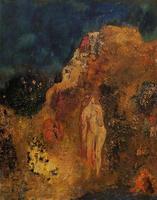
Bathers
Odilon Redon
Seated Nude
Bela Czobel
Woman (grey nude)
Eugene Leroy
Standing Bather, Drying Her Hair
Paul Cezanne
Blonde nude
Amedeo Modigliani
Nu Cubista
Anita Malfatti
Untitled (Three Nudes)
Mark Rothko
Self Portrait
Émilie Charmy
Nude
Bela Czobel
Nude
Ilya Mashkov
Nude with Green Slippers
Émilie Charmy
Nu Cubista N°1
Anita Malfatti
Discovery of the Song
George Stefanescu
Alaston
Sallinen Tyko