
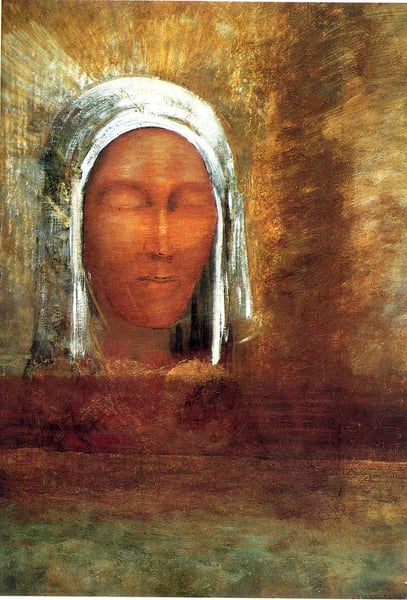
Expert analysis of Odilon Redon’s Virgin of the Dawn
Style: Symbolism · Genre: symbolic painting
Expert Analysis: Virgin of the Dawn by Odilon Redon
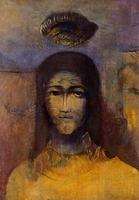
Odilon Redon’s Virgin of the Dawn is a quintessential work of the Symbolist movement, demonstrating the artist’s profound shift from his earlier “noirs” (charcoal drawings) to luminous, color-saturated pastels and oils. Its significance lies in how it synthesizes Symbolism’s core ambitions: the rejection of literal representation in favor of inner vision, the evocation of the mysterious and the sacred through chromatic and compositional means, and the transformation of a traditional religious figure into an intimate, personal emblem.
As a symbolic painting, the work dissolves the conventional iconography of the Virgin Mary. Redon eschews a narrative setting or didactic gesture, instead presenting a face that emerges from—or dissolves into—a golden, dawn-lit haze. The title itself is a poetic fusion: “Dawn” aligns the divine feminine with the liminal moment between night and day, suggesting spiritual awakening, renewal, and the ineffable. The face is idealized yet remote, with large, dark eyes that gaze inward rather than outward, characteristic of Redon’s treatment of figures as vessels for the soul. The warm, jewel-like palette—yellows, oranges, and soft reds—creates an ambient glow that seems to emanate from within the canvas, embodying the idea of light as a vehicle for the divine.
Redon’s technique is crucial here: the soft, blurred contours and the textured application of pigment (often pastel or oil) prevent the image from solidifying into a fixed form. This ambiguity is intentional—it forces the viewer to rely on emotion and intuition rather than recognition. In this way, Virgin of the Dawn exemplifies Symbolism’s break from Impressionist optical fidelity and Academic storytelling. Redon once wrote that his art aimed to “place the logic of the visible at the service of the invisible.” Here, the visible—a woman’s face, warm colors—is merely a threshold. The invisible—the sensation of awe, the promise of revelation, the mystery of maternal divinity—is the true subject.
Thus, the painting is significant not as a devotional image but as a psychological and spiritual landscape. It encapsulates Redon’s belief that art should suggest rather than state, and in doing so, it marks a pivotal moment where Symbolism fully embraces the subjective, the dreamlike, and the transcendental. Virgin of the Dawn remains a luminous testament to how Symbolist artists transformed archaic myth and religious imagery into deeply felt, modern metaphors for inner experience.
Visually similar
20 works with related composition and palette
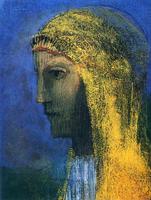
The Druidess
Odilon Redon
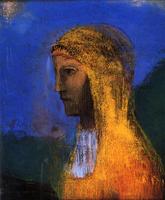
The Druidess
Odilon Redon
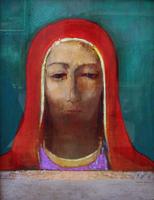
Silence
Odilon Redon
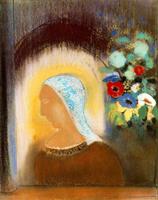
Profile and Flowers
Odilon Redon
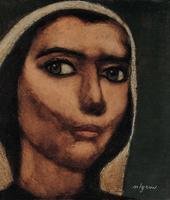
Untitled Portrait
Nuri Iyem
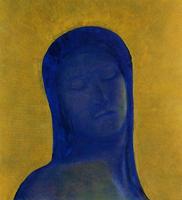
Closed Eyes
Odilon Redon
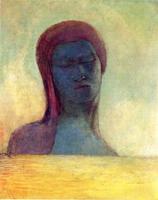
Closed Eyes
Odilon Redon
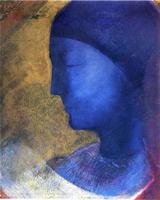
The Golden Cell
Odilon Redon
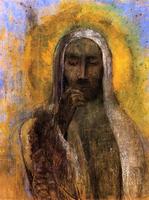
Christ in Silence
Odilon Redon
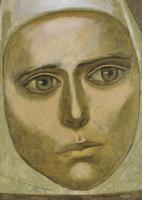
Peasant Girl
Nuri Iyem
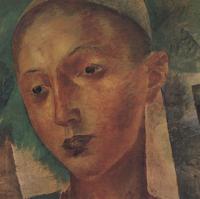
Boy-Uzbek
Kuzma Petrov-Vodkin
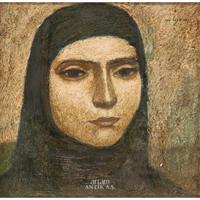
Untitled Portrait
Nuri Iyem
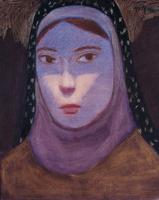
Untitled Portrait
Nuri Iyem
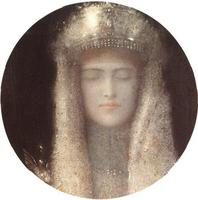
The Silver Tiara
Fernand Khnopff
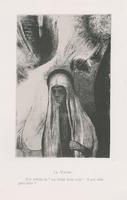
The Old Woman: What are you afraid of? A wide black hole! Perhaps it is a void? (plate 19)
Odilon Redon
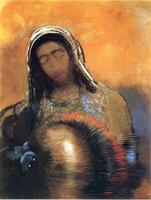
Buddha
Odilon Redon
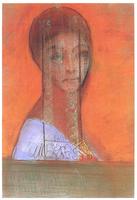
Woman with Veil
Odilon Redon
Venerabile
Nicola Samorì
Odalisque
Iosif Iser
Mysterious Head
Odilon Redon