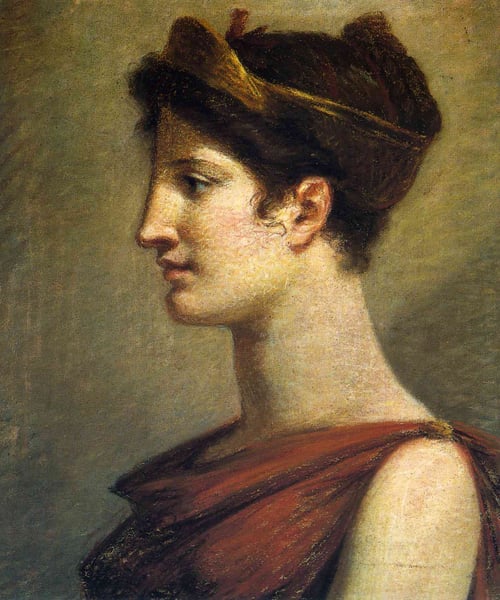
Pierre-Paul Prud'hon の The wealth の専門的な分析
スタイル:Neoclassicism · ジャンル:portrait
Expert Analysis of "The Wealth" by Pierre-Paul Prud'hon
Although only the barest identifiers are provided—artist, style, and genre—this single work encapsulates a pivotal moment in late Neoclassicism. Pierre-Paul Prud'hon (1758–1823) stands apart from his more rigid contemporaries like David precisely because he infused Neoclassicist structure with a soft, pre-Romantic sensibility.
Genre and Style: As a portrait, "The Wealth" likely depicts either an allegorical figure (a personification of Richesse) or a specific patron rendered with idealizing grace. Prud'hon’s Neoclassicism is not the hard-edged, morally austere style of the Davidian school; instead, he favors sfumato-like transitions, a milky chiaroscuro, and a dreamy, pearlescent palette—traits borrowed from Correggio and Leonardo that soften the classical clarity.
Significance within Neoclassicism: The work’s true importance lies in how it stretches Neoclassicism toward Romanticism. Where David’s portraits are forensic in their realism and civic in their intent, Prud'hon’s "The Wealth" suggests interiority and mood. The sitter (or emblem) is draped in luxurious fabrics, but the light falls in gentle gradations, dissolving edges and creating an atmosphere of reverie rather than didactic virtue. This tension—between the orderly, intellectual Neoclassic mode and a more emotive, sensual handling of paint—marks Prud'hon as a transitional figure.
Art-Historical Contribution: "The Wealth" demonstrates that Neoclassicism could accommodate private sentiment and psychological nuance, not just public heroism. Prud'hon’s later influence on Romantic portraitists (e.g., Géricault, even Delacroix) is prefigured here: the figure becomes a vessel for feeling, her gaze half-lost, the drapery alive with a painterly breath. In this portrait, wealth is not merely a subject but a mood—a shimmering, poignant stillness that quietly subverts the stern rationalism of its era.
視覚的に類似
構図やパレットが近い作品 20 件
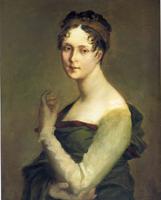
Portrait of Josephine de Beauharnais
Pierre-Paul Prud'hon
Portrait of a Woman
Károly Lotz
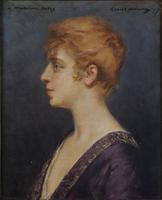
Portrait De Madeleine Aubry
Louise Abbéma
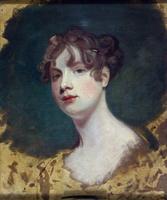
Sketch of a Female Head
George Romney
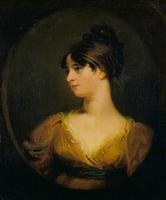
Portrait of a Lady
Thomas Lawrence
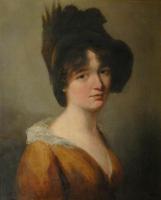
Mary Somerville (1780–1872), as a Young Woman
John Jackson
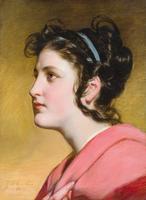
Elise Kreuzberger, profile with blue ribbon and loose hair
Friedrich von Amerling
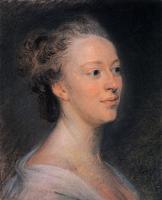
Beautiful girl from Zuylen
Maurice Quentin de La Tour
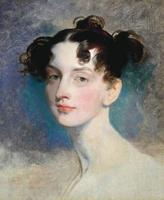
Princess Lieven
Thomas Lawrence
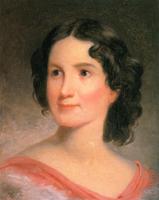
Miss Carter
Thomas Sully
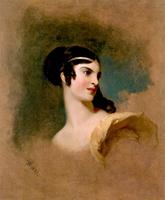
Fanny Kemble as Julia in the Hunchback
Thomas Sully
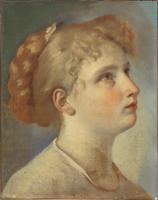
Maid
Vincenzo Camuccini
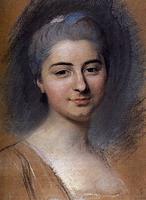
Study for portrait of unknown woman
Maurice Quentin de La Tour
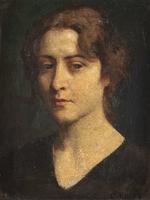
Portrait of a lady (Alzire Irma Maillart, née Demontreille?)
Diogène Maillart
Ideal Head
Julian Alden Weir
Portrait of Mrs.Charles Schreiber
John William Waterhouse
Alsacienne Alsace Antiquaire
Jean Benner
A Gypsy
Henryk Siemiradzki
Lady Lea
Thomas Lawrence
Portrait of Madame de Pompadour
Maurice Quentin de La Tour