Expert analysis of Claude Lorrain’s Landscape With Dancing Satyrs and Nymphs
Style: Classicism · Genre: mythological painting
Expert Analysis of "Landscape With Dancing Satyrs and Nymphs" by Claude Lorrain
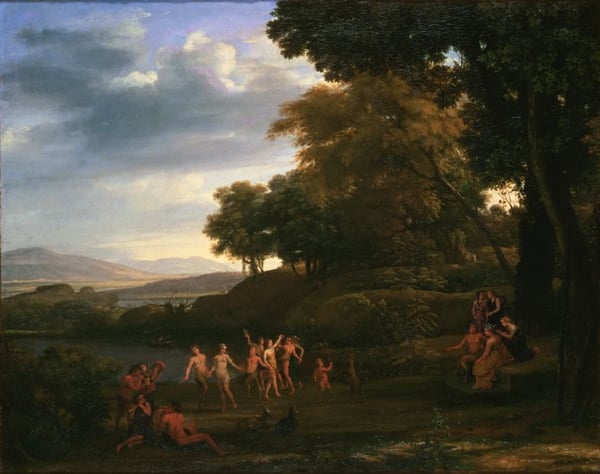
Claude Lorrain’s Landscape With Dancing Satyrs and Nymphs is a quintessential work of Classicism, a style that sought to revive the order, harmony, and idealized beauty of ancient Greco-Roman art. Within this framework, Lorrain elevates the mythological painting genre by seamlessly integrating narrative figures into a meticulously composed natural setting.
Significance within Classicism and its Period:
-
Idealized Nature as a Stage for Myth: Lorrain’s landscape is not a realistic depiction but a carefully constructed, pastoral ideal. The balanced composition—with a distant horizon, framing trees, and a soft, golden light—creates a sense of timeless serenity. This reflects the Classical belief that nature should be ordered and harmonious, echoing the rationality of ancient art.
-
Mythological Figures as Harmonious Elements: The satyrs and nymphs, drawn from classical mythology, are not merely decorative. Their dancing, set within this tranquil landscape, embodies the Classical ideal of otium—a graceful, civilized leisure. Lorrain presents the mythological world as a natural, believable part of the pastoral scene, blurring the line between human, divine, and natural realms.
-
Influence on Landscape Tradition: Lorrain’s ability to make the landscape the primary subject while using mythology to enhance its mood was revolutionary. This painting exemplifies the “heroic landscape” style that would profoundly influence later artists, from the Romantics to the Hudson River School, establishing a model for how nature could express grandeur, nostalgia, and ideal beauty.
In sum, this work is significant because it embodies Classicism’s core tenets—order, balance, and idealized truth—while pioneering a vision of landscape that would define European painting for centuries.
Museum / Gallery
Visually similar
20 works with related composition and palette
Roman Ideal Landscape with Cephalus, Procris, and Diana
Claude Lorrain
Landscape with Flight into Egypt
Claude Lorrain
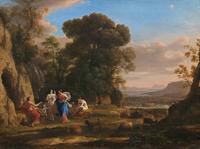
The Judgement of Paris
Claude Lorrain
Landscape with the Judgement of Paris
Jan Dirksz Both
Landscape with the Rape of Hylas Joseph Anton Koch
Joseph Anton Koch
Landscape With The Marriage Of Isaac And Rebekah
Claude Lorrain
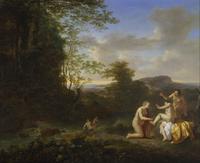
Landscape with Nymphs
Jan Dirksz Both
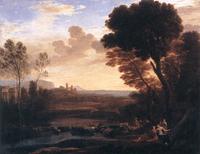
Landscape with Paris and Oenone
Claude Lorrain
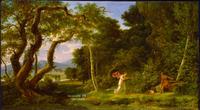
Cephisa Shoots Cupid's Bow - a Scene from Montesquieu's Céphise Et L'amour published in 1725
Pierre-Henri de Valenciennes
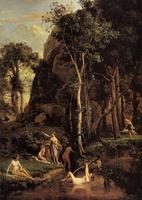
Diana Surprised at Her Bath
Camille Corot
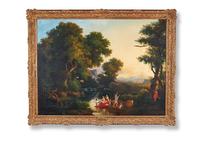
Diana and Actaeon
Claude Lorrain
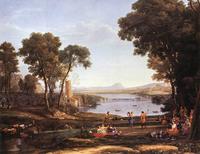
Landscape with Water Mill
Claude Lorrain
Syrinx fleeing from the onslaught of Pan
Arnold Böcklin
Diana dormida
Frans Wouters
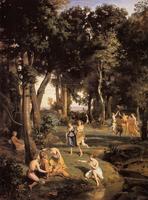
Silenus
Camille Corot
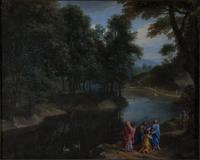
Christ Healing the Deaf-Mute
Philippe de Champaigne
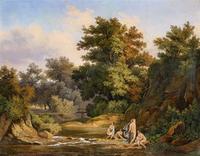
Wooded landscape with bathing nymphs
Károly Markó the Elder
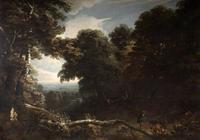
Landscape View through a Wood
George Lambert
Allegory of Water
Jan Brueghel the Elder
Landscape with the Adoration of the Golden Calf
Claude Lorrain