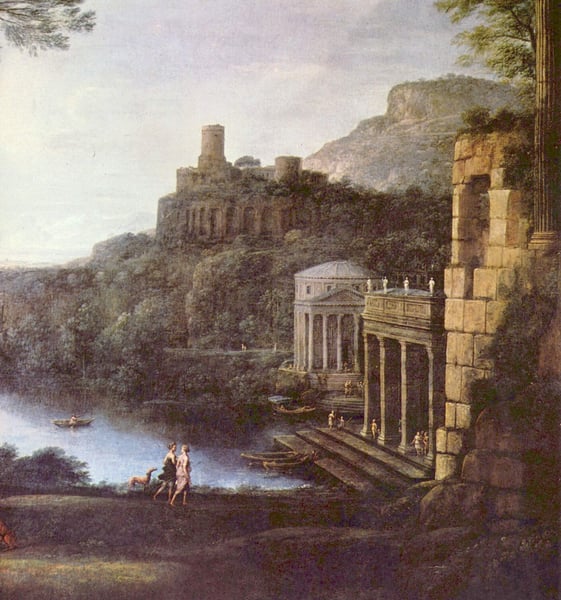
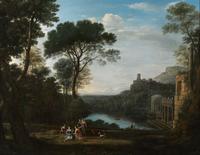
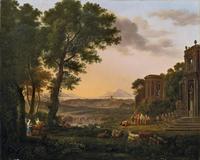
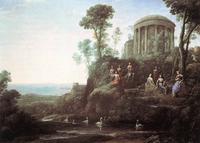
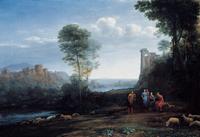
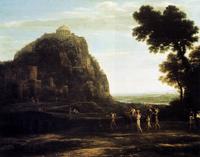
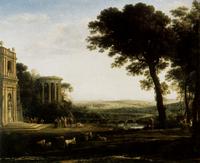
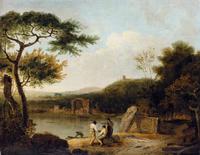
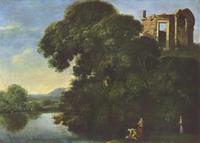
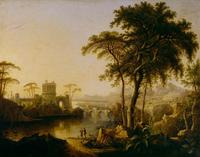
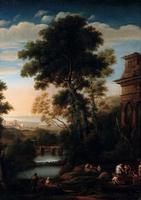
Claude Lorrain’s Landscape with the nymph Egeria and Numa stands as a quintessential example of Classicism in landscape painting, merging mythological narrative with an idealized natural setting. The work’s significance lies in its embodiment of the classical ideal: a harmonious, balanced composition where the human figures—the nymph Egeria and King Numa—are seamlessly integrated into a serene, timeless landscape. Lorrain’s treatment of light and atmosphere elevates the scene, creating a poetic vision of antiquity that prioritizes order, clarity, and moral allegory. As a mythological painting, it draws on Ovid’s Metamorphoses, but the true subject is the landscape itself, rendered with a measured, idyllic beauty that influenced generations of later artists. This piece exemplifies how Classicism transformed landscape into a vehicle for philosophical and aesthetic contemplation, rather than mere topographical record.