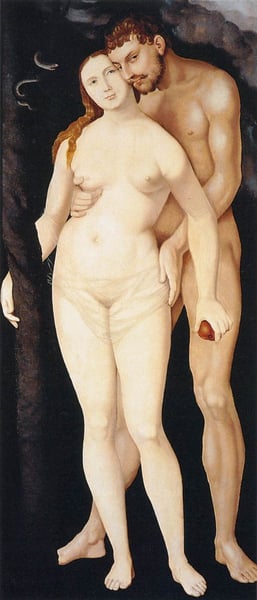
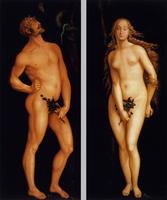
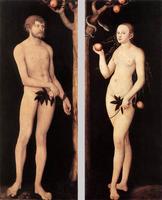
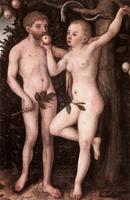
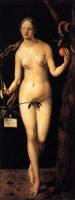
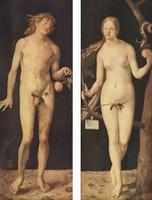
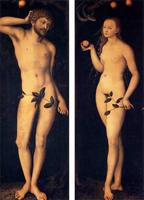
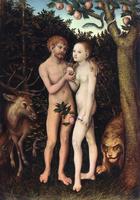
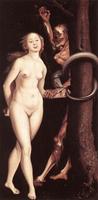
Based solely on the supplied facts—that "Adam and Eve" is a Northern Renaissance religious painting by Hans Baldung—its significance lies in how it exemplifies the distinctive concerns of the Northern Renaissance within a biblical subject.
First, as a religious painting of the Fall of Man, it engages a central Christian narrative. However, its Northern Renaissance style distinguishes it from contemporary Italian treatments. Northern artists of this period fused meticulous naturalism with complex symbolism, often emphasizing human frailty, mortality, and the moral consequences of sin. Where Italian Renaissance works might idealize the human form and celebrate classical balance, Northern works like Baldung’s typically explore the darker, more psychological dimensions of the story.
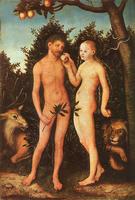
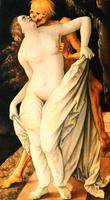
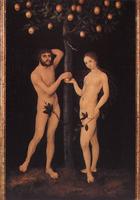
Second, within Baldung’s own oeuvre, this painting represents the Northern Renaissance fascination with the tension between sensuality and death. The stark juxtaposition of the seductive, fully realized figures of Adam and Eve with the sinister serpent (and often, in Baldung’s imagery, hints of decay or temptation) underscores the era’s preoccupation with original sin as both an irresistible human impulse and a source of existential dread. This makes the work significant as a quintessential Northern Renaissance meditation on the price of knowledge and the inherent vulnerability of humanity—a theme Baldung explored repeatedly, using the religious painting genre as a vehicle for profound, unsettling moral inquiry.