
Expert analysis of Berthe Morisot’s The Port of Nice
Style: Impressionism · Genre: marina
Expert Analysis of "The Port of Nice" by Berthe Morisot
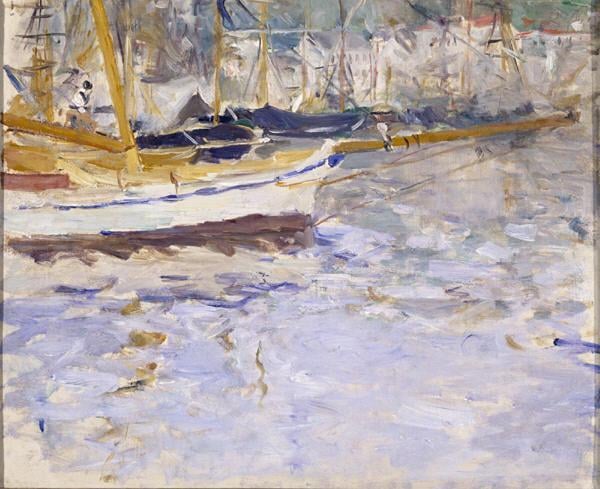
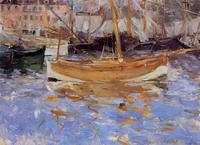
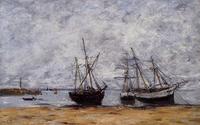
As an Impressionist marina, Berthe Morisot’s The Port of Nice exemplifies the movement’s revolutionary approach to capturing the transient effects of light, atmosphere, and modern leisure. Painted during a period when the French Riviera was becoming a fashionable destination, this work stands out for its delicate yet spontaneous handling of a maritime scene—a genre less associated with Morisot, who was more widely known for intimate domestic and garden subjects.
Significance within Impressionism:
- Brushwork and Light: Morisot employs the hallmark Impressionist technique of rapid, broken brushstrokes, particularly visible in the shimmering reflections on the water and the hazy shimmer of the port’s architecture. This approach captures the fleeting quality of Mediterranean sunlight, a subject that fascinated Impressionists painting en plein air.
- Color Palette: The cool blues and whites of the sky and sea are punctuated by warm accents (perhaps in boats or distant buildings), demonstrating the Impressionist interest in complementary colors and optical mixing. Morisot’s signature soft, feathery touch lends the scene an airy, almost lyrical quality, softening the industrial or commercial aspects of the port into a vision of coastal tranquility.
- Modern Life: The choice of Nice—a resort town transformed by tourism and railway access—aligns with the Impressionist focus on contemporary leisure and urban-rural escape. Morisot’s perspective as a woman artist offers a subtle, observational nuance: where male peers might emphasize grand maritime trade or ship movements, she treats the port as a luminous, atmospheric tableau, emphasizing the play of light over narrative action.
Gender and Genre: As a leading female Impressionist, Morisot’s venture into the marina genre was noteworthy. While women of her era were often restricted from public, bustling spaces like ports, her access—likely through family connections or visits—allowed her to reinterpret this masculine subject through a distinctly Impressionist lens: intimate, sensory, and devoid of heroic or anecdotal detail. The Port of Nice thus challenges period gender norms by claiming the outdoor, marine landscape as a valid subject for a female artist, all while retaining the delicate spontaneity that defines her oeuvre.
In sum, this painting is significant because it demonstrates how Morisot—a key figure in the Impressionist circle—adapted the movement’s core principles (light, spontaneity, modern life) to a marina subject, expanding the scope of Impressionist imagery and asserting a female perspective within a traditionally male-dominated genre.
Museum / Gallery
Visually similar
20 works with related composition and palette
Oyster Boats, North River
John Henry Twachtman
Arkhangelsk. Ships in port.
Pyotr Konchalovsky
Cherbourg
Eugene Boudin
The Port of Nice
Berthe Morisot
Port De Cherbourg
Henri Matisse
Port De Cherbourg
Henri Matisse
Fishing Boats at Gloucester
John Henry Twachtman
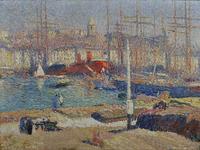
Port of Marseille
Henri Martin
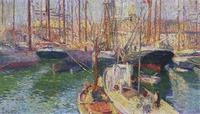
Port of Marseille
Henri Martin
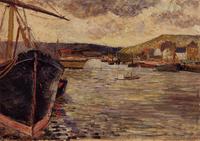
The Port Of Rouen
Paul Gauguin
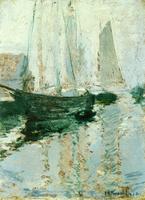
Gloucester Boats
John Henry Twachtman
Marseilles
Henri Martin
Royan
Samuel Peploe
The Empavesado yacht
Raoul Dufy
Boats in the Port of Marseille
Henri Martin
Boats at Anchor
John Henry Twachtman
Port of Marseille
Henri Martin
The port Portrieux
Eugene Boudin
Pleasure Boats, Argenteuil, c.1872-3 (oil on canvas)
Claude Monet
The port Portrieux at low tide
Eugene Boudin