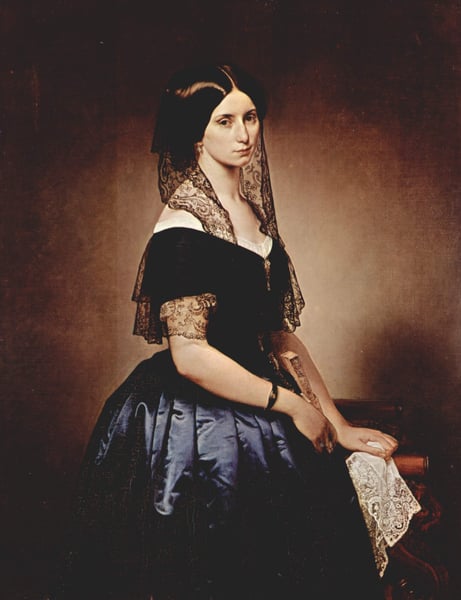
Artwork Analysis: "Portrait of Antonietta Tarsis Basilico" by Francesco Hayez
Style/Period Context:
Executed in the Romantic tradition, this portrait exemplifies Francesco Hayez’s mastery of capturing psychological depth and emotional interiority—hallmarks of Romanticism. Hayez, a leading figure in 19th-century Italian painting, was celebrated for his ability to infuse historical and contemporary subjects with intense sentiment and dramatic realism.
Significance:
The work is significant for its nuanced depiction of individuality and status, characteristic of Romantic portraiture. Hayez elevates the sitter beyond mere likeness, suggesting a narrative of personal identity and social grace. The artist’s virtuosic handling of light, texture, and color—likely rich fabrics and a warm, expressive palette—evokes both the sitter’s character and the Romantic fascination with the inner life. As a portrait of Antonietta Tarsis Basilico, it also reflects Hayez’s engagement with the Milanese bourgeoisie and his role in shaping a modern, romanticized vision of Italian identity through portraiture. The painting stands as a testament to Hayez’s ability to merge technical brilliance with emotional resonance, securing his place as a pivotal artist of the Romantic era.