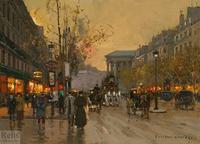
Rue Royale
Analisi esperta di Rue Royale di Edouard Cortes
Stile: Post-Impressionism · Genere: cityscape
Expert Analysis: "Rue Royale" by Edouard Cortes
Style & Period Significance
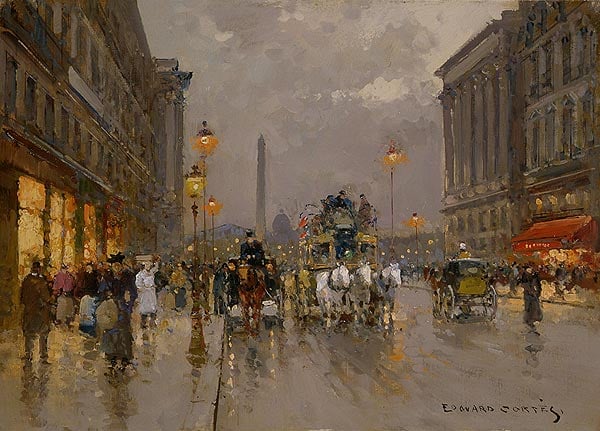
Though often categorized broadly as a Post‑Impressionist cityscape, Cortes’s work occupies a distinct niche within that movement. Post‑Impressionism emerged as a reaction against Impressionism’s naturalistic emphasis on light; artists like Seurat, Van Gogh, and Cézanne sought greater emotional expression, symbolic content, or structural rigor. In Rue Royale, Cortes adapts these concerns to the urban scene, balancing the ephemeral play of light (an Impressionist legacy) with a more deliberate, atmospheric mood and a carefully constructed composition. His brushwork is both fluid and controlled, rendering the wet cobblestones, horse‑drawn carriages, and gaslit shop windows with a nostalgic clarity that elevates a simple street view into a poetic vision of Belle Époque Paris.
Composition & Technique
The painting typically depicts the Rue Royale looking toward the Madeleine Church, a landmark that anchors the scene. Cortes uses a broad, slightly elevated vantage point, drawing the eye down the receding street. He employs a warm, harmonious palette—ochres, soft grays, and muted blues—punctuated by accents of red and gold from carriages and streetlamps. The sky is often a luminous twilight or overcast glow, diffusing light and unifying the architectural details. Unlike strict Impressionists, Cortes does not dissolve forms; he preserves the solidity of buildings and figures while enveloping them in soft, atmospheric haze—a hallmark of his personal style that merges descriptive accuracy with emotional resonance.
Significance in Post‑Impressionist Cityscape
Rue Royale is significant because it exemplifies how Post‑Impressionist principles could be applied to the urban environment without losing the genre’s impressionistic charm. Where earlier Impressionists like Monet painted the same street corner to capture changing light, Cortes treats a single moment as a finished, evocative tableau. The work’s enduring appeal lies in its ability to transport the viewer: the carefully orchestrated recession of space, the subtle interplay of artificial and natural light, and the suggestion of bustling yet orderly Parisian life all contribute to a quiet monumentality. This painting, like much of Cortes’s oeuvre, helped define the romantic image of Paris that persists in popular imagination—a timeless, elegant city frozen in the twilight of the early 20th century.
Visivamente simili
20 opere con composizione e palette affini
Royal Street, Consent
Edouard Cortes
Rue Royale Concorde
Edouard Cortes
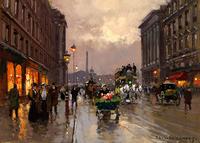
Concorde and Rue Royale
Edouard Cortes
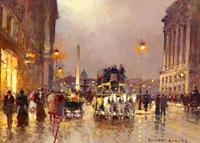
The Concorde Square, Le Soir
Edouard Cortes
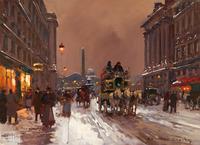
Rue Royale, Winter
Edouard Cortes
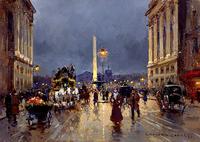
Rue Royale Concorde
Edouard Cortes
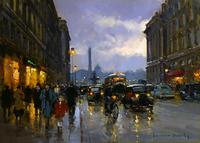
Place de la Concorde
Edouard Cortes
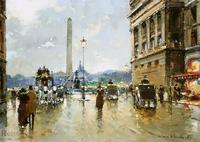
Place de la Concorde
Antoine Blanchard
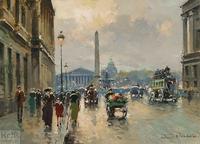
Place de la Concorde
Antoine Blanchard
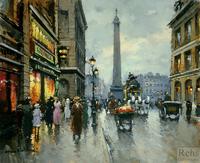
Rue de la Paix Place Vendome
Antoine Blanchard
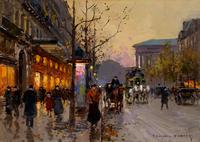
Boulevard de la Madeleine
Edouard Cortes
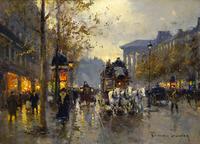
Boulevard de la Madeleine
Edouard Cortes

Boulevard de la Madeleine, Winter
Edouard Cortes
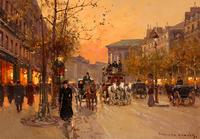
Boulevard de la Madeleine
Edouard Cortes
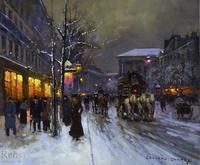
Boulevard de la Madeleine, Winter
Edouard Cortes
Place de la Bastiile
Antoine Blanchard
Boulevard des Сapucines
Edouard Cortes
Boulevard de la Madeleine
Edouard Cortes
Paris Boulevard
Konstantin Korovin
Boulevard de la Madeleine
Edouard Cortes