Analisi esperta di Composition in gray (Rag Time) di Theo van Doesburg
Stile: Neoplasticism · Genere: abstract
Expert Analysis of "Composition in gray (Rag Time)" by Theo van Doesburg
Style: Neoplasticism (De Stijl)
Genre: Abstract
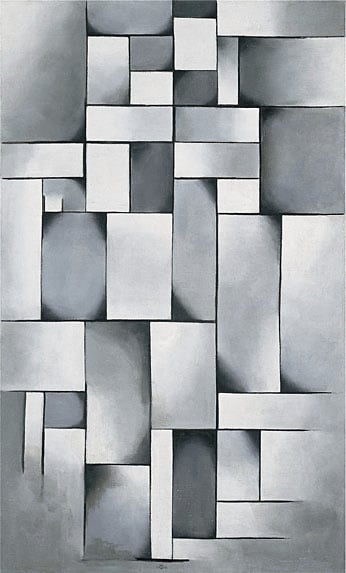
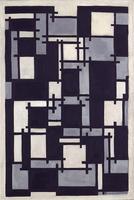
This work is a pivotal example of Theo van Doesburg's evolution within Neoplasticism and his eventual break from Piet Mondrian's rigid orthodoxy. While De Stijl famously advocated for pure abstraction through orthogonal lines and primary colors (red, blue, yellow), van Doesburg’s Composition in gray (Rag Time) signals a radical shift toward Elementarism—his name for a dynamic, diagonal-based counterpoint to Mondrian’s static balance.
Why it is significant:
-
The rejection of primary color: By limiting the palette to grays, van Doesburg deliberately subverts the "universal harmony" associated with primary hues. This monochrome approach emphasizes structure and rhythm over chromatic symbolism, aligning the work more closely with the syncopated energy of ragtime music (as the title suggests).
-
The introduction of dynamic diagonals: Unlike Mondrian’s insistence on strict verticals and horizontals, Rag Time introduces asymmetric, tilted lines and off-kilter rectangles. This diagonal thrust creates a sense of motion and improvisation—a visual parallel to the irregular beats of ragtime. Van Doesburg argued that diagonals expressed "life in motion," while horizontals/verticals represented "static equilibrium."
-
Theoretical rupture: This painting directly challenged Mondrian’s concept of "pure plastic art." In 1924, van Doesburg publicly defended his diagonal compositions, leading to a definitive split in the De Stijl movement. Rag Time thus becomes a manifesto in paint, heralding Elementarism as a more dynamic, less dogmatic branch of Neo-Plasticism.
Art-historical importance:
Composition in gray (Rag Time) marks the moment when Neoplasticism pivoted from a universal, spiritual geometry to a modern, rhythmic abstraction inspired by jazz and urban tempo. It demonstrates van Doesburg’s lifelong drive to merge art with life, architecture, and sound—making this work not only a key transitional piece but also a precursor to later Bauhaus and Constructivist experiments with movement and asymmetry.
Museum / Gallery
Visivamente simili
20 opere con composizione e palette affini
Relational Painting
Fritz Glarner
Pure Painting
Theo van Doesburg
Relational Painting
Fritz Glarner
Composition with Gray and Light Brown
Piet Mondrian
Composition A
Piet Mondrian
Composition in dissonances
Theo van Doesburg
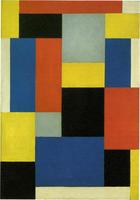
Composition XX
Theo van Doesburg
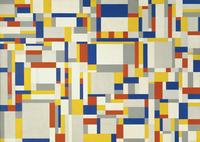
Large Architectural
Ilya Bolotowsky
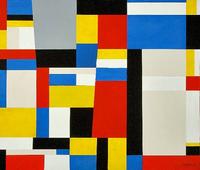
Untitled
John McLaughlin
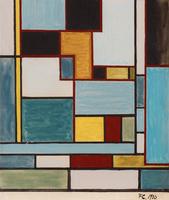
Composition Néoplasticiste
Franciska Clausen
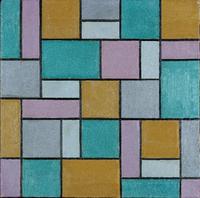
Composition XVII
Theo van Doesburg
Relational Painting #64
Fritz Glarner
Composition
Georges Vantongerloo
Untitled
Johannes Itten
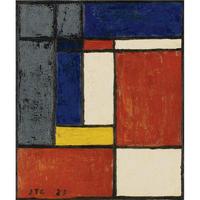
Costruzione Geometrica
Joaquin Torres Garcia
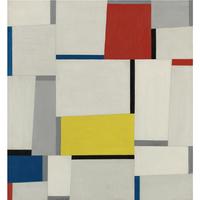
Relational Painting #65
Fritz Glarner
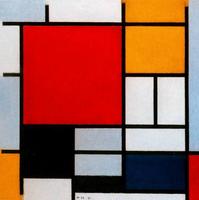
Composition with Large Red Plane, Yellow, Black, Gray and Blue
Piet Mondrian
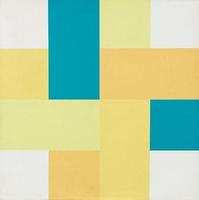
Vier verschränkte Farbgruppen mit blau grünen Akzenten
Richard Paul Lohse
Composition X
Theo van Doesburg
Neoplastic Composition
Franciska Clausen