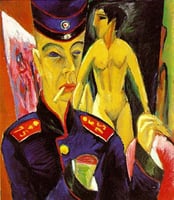
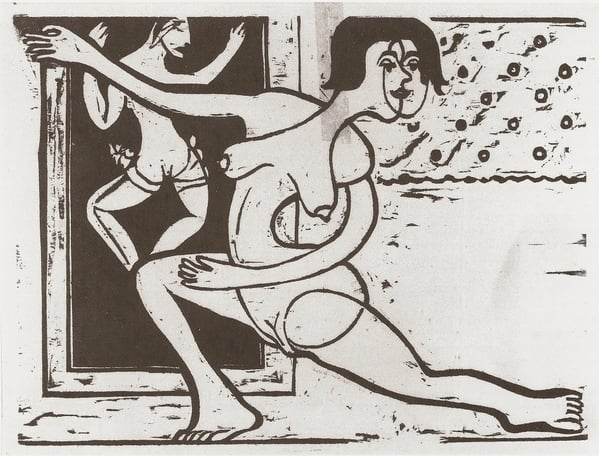
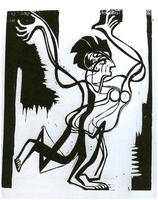
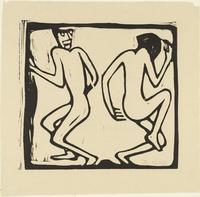
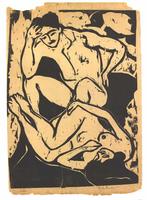
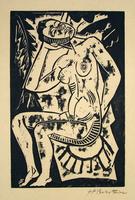
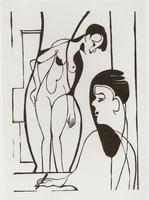
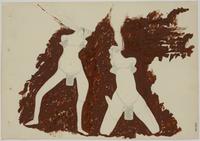
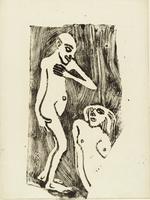
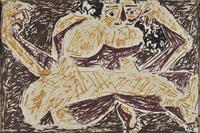
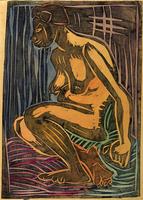
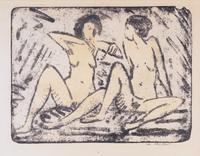
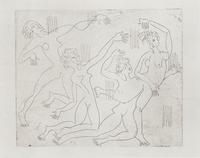
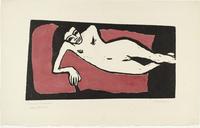
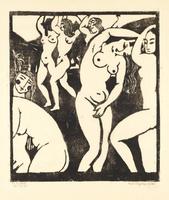
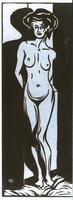
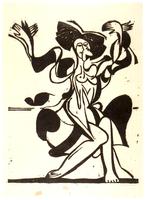
Ernst Ludwig Kirchner’s Practising Dancer is a pivotal work of German Expressionism, embodying the movement’s radical break from naturalistic representation. As a nude painting, it subverts traditional academic nudes by prioritizing psychological intensity and dynamic movement over idealized beauty. Kirchner—a founding member of Die Brücke—uses distorted anatomy, sharp angular lines, and jarring, non-naturalistic color to convey the dancer’s inner vitality and erotic energy. The figure’s contorted pose and the aggressive brushwork capture the raw, primal essence of modern dance, a theme that resonated with Expressionist artists seeking to depict the human form as a conduit for emotional and spiritual expression. The work’s significance lies in its rejection of passive classical nudity in favor of an active, almost confrontational embodiment of motion and psyche, marking a definitive shift toward subjective, visceral representation in early 20th-century art.