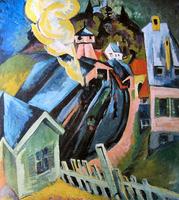
Expert Analysis: "Railways in the Taunus" by Ernst Ludwig Kirchner
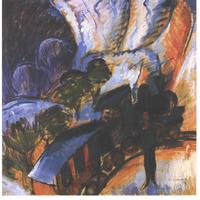
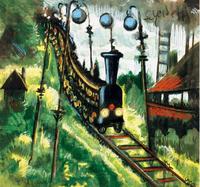
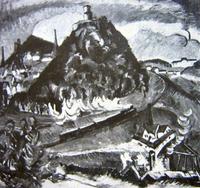
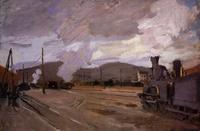
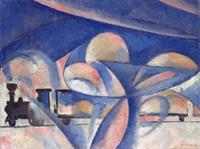
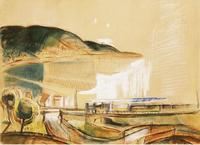
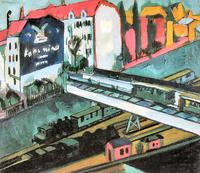
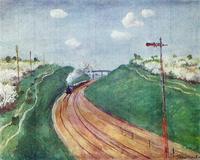
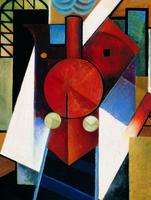
As an Expressionist cityscape, this work exemplifies the movement's core drive to convey raw emotional and psychological experience over literal representation. Kirchner, a leading figure of German Expressionism, uses the urban-industrial motif—here, railways cutting through the Taunus region—to explore the tension between modern progress and nature. The genre of cityscape is transformed: instead of a tranquil view, Kirchner likely distorts perspective, heightens color, and employs jagged, dynamic brushwork to evoke the speed, noise, and alienation of railway travel. The significance lies in how the painting captures the subjective anxiety of early 20th-century life, turning a mundane infrastructure scene into a charged, emotional landscape. By rejecting naturalistic depiction in favor of bold, dissonant hues and angular forms, Kirchner aligns the work with the Expressionist goal of revealing inner truth—making "Railways in the Taunus" a powerful document of modernity filtered through a deeply personal, agitated vision.