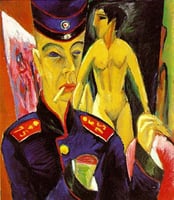
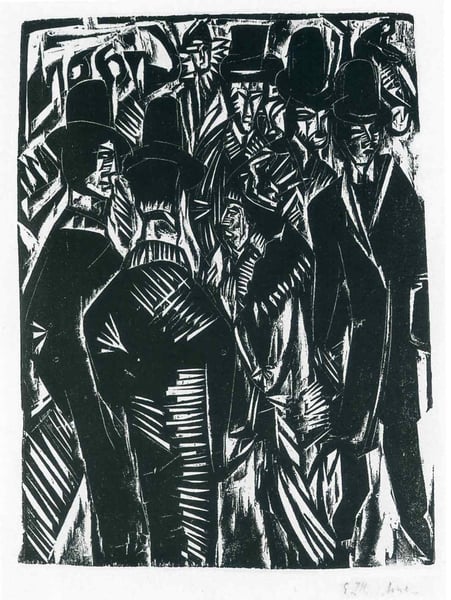
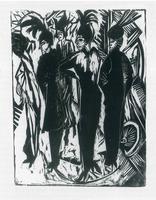
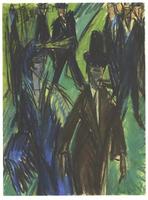
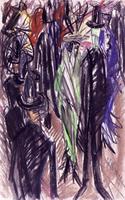
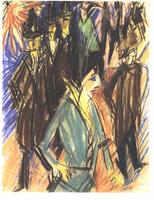
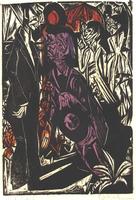
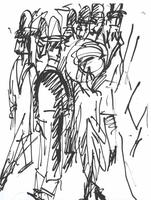
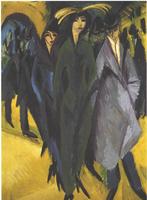
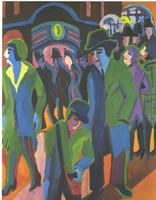
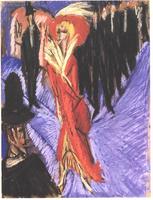
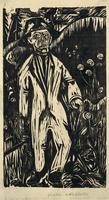
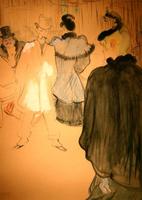
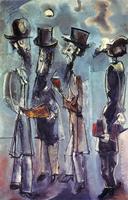
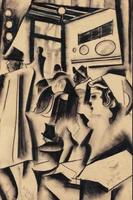
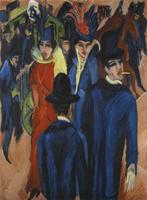
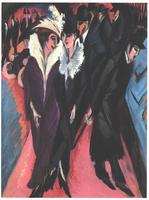
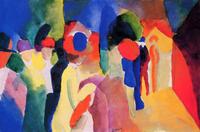
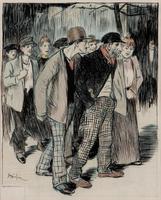
This work is a quintessential example of German Expressionism, embodying the movement's core aim to convey raw emotional experience over naturalistic representation. As a genre painting, it captures a fleeting moment of modern urban life, but Kirchner distorts the scene to communicate the anxiety, alienation, and frenetic energy of early 20th-century Berlin. The figures are elongated and angular, their faces mask-like, reflecting the psychological dislocation of the individual within the crowded metropolis. The jarring, non-naturalistic colors and the shallow, compressed space of the shop window create a sense of claustrophobia and visual dissonance. Kirchner’s bold, slashing brushstrokes and the aggressive interplay of forms typify the "Brücke" group's rejection of bourgeois conventions. This painting’s significance lies in its radical transformation of a mundane street scene into a powerful psychological landscape, making visible the inner turmoil of the modern city dweller—a hallmark of Expressionist painting.