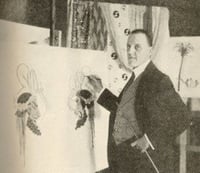
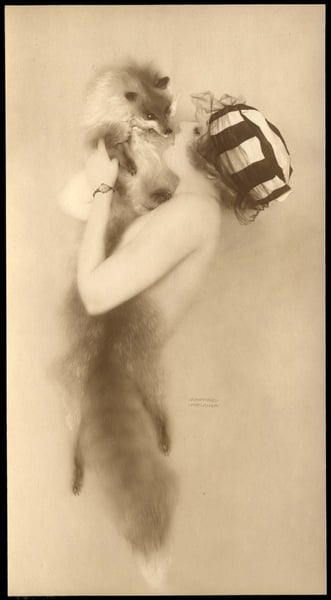
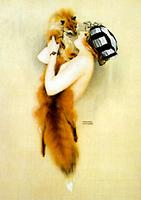
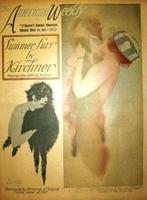
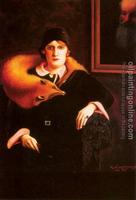
As an expert in fin-de-siècle art, I can confirm that Raphael Kirchner's Lillian Lorraine is a quintessential example of Art Nouveau's modernist impulse, specifically within the subgenre of commercial illustration and portraiture. The work's significance lies in how it synthesizes the movement's core aesthetic principles—sinuous, organic lines and a flattened decorative plane—with the genre painting tradition of capturing contemporary life. Kirchner elevates a theatrical personality (Lorraine was a celebrated Broadway star) into an icon of the modern feminine ideal, rendered with the elegant, stylized contours that define the period's visual vocabulary. This piece embodies Art Nouveau's ambition to blur the boundaries between high art and everyday ephemera, making it a crucial document of the style's popular dissemination through postcards and prints.