Expert Analysis of Love Flowers by Raphael Kirchner
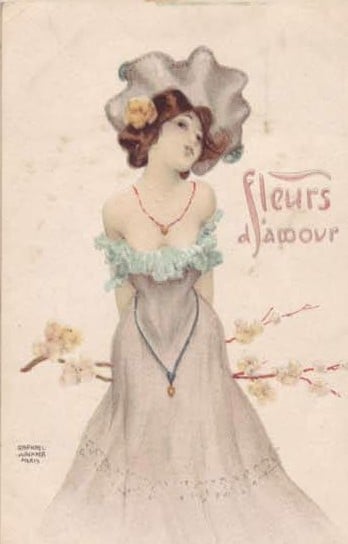
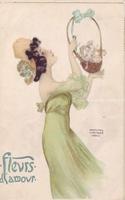
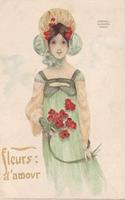
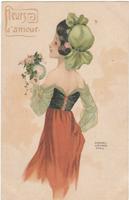
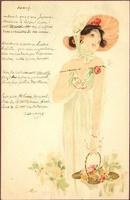
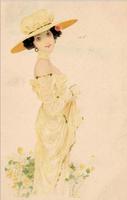
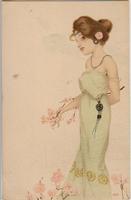
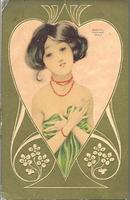
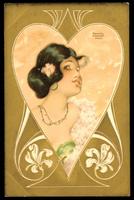
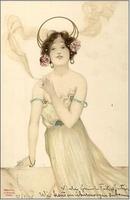
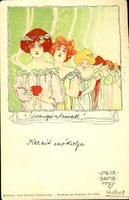
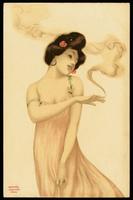
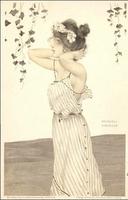
Raphael Kirchner’s Love Flowers exemplifies the elegant, decorative spirit of Art Nouveau, particularly in its celebration of organic, flowing forms and romanticized femininity. As a genre painting—a scene of everyday life—it draws on the period’s fascination with nature and sentiment, but Kirchner elevates the subject through the sinuous, curvilinear linework and flattened, ornamental composition typical of the style.
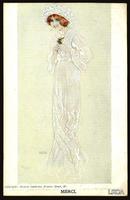
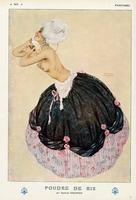
What makes this work significant is its role in popularizing Art Nouveau aesthetics beyond elite galleries. Kirchner was a master of the postcard, and Love Flowers bridges fine art and commercial imagery: the delicate woman framed by blossoms embodies the era’s ideal of beauty, while the stylized, rhythmic forms make the image accessible and reproducible. This fusion of high-art symbolism (flowers as love) with mass-market appeal helped democratize Art Nouveau, influencing fashion, illustration, and decorative arts. The artwork is thus a key example of how the movement’s signature motifs—lush nature, refined linearity, and graceful figures—became embedded in modern visual culture.