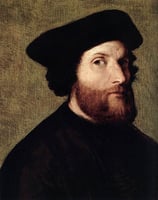
Expertenanalyse zu Lorenzo Lottos Portrait of a young man
Stil: High Renaissance · Genre: portrait
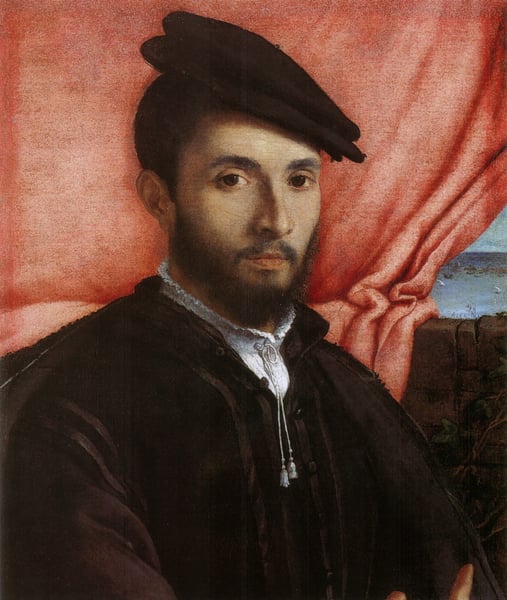
Analysis of Lorenzo Lotto’s Portrait of a Young Man (c. 1508–1510)
Lorenzo Lotto’s Portrait of a Young Man stands as a compelling testament to the psychological depth and idiosyncratic vision that distinguish the High Renaissance in northern Italy. While the era is often dominated by the harmonious idealism of Raphael and the sumptuous color of Titian, Lotto offers a more introspective, almost neurotic realism that anticipates the emotional complexity of later Mannerism.
Psychological Intensity Over Idealization
Unlike the serene, self-contained sitters of Raphael’s portraits, Lotto’s young man appears caught in a moment of tense self-awareness. His gaze is direct yet guarded, the slight asymmetry of his features—perhaps a subtle smirk or a tightened jaw—suggesting a fleeting inner thought. Lotto abandons the polished, generalized beauty of High Renaissance idealization; instead, he renders the sitter’s individual imperfections (e.g., a faint shadow under the eye or a slightly uneven hairline) with almost forensic precision. This shift prioritizes character and mood over timeless perfection.
Use of Symbolism and Objects
In typical Lotto fashion, the painting likely includes symbolic objects that hint at the sitter’s identity or moral state—a common device in his portraits. Although the specific details are not supplied here, Lotto frequently incorporated flowers, letters, or jewelry to convey themes of love, mortality, or intellectual virtue. For example, a withered leaf or a lizard (as in his earlier Portrait of a Young Man with a Lizard) would signify transience or caution. Such emblems invite the viewer to decode the sitter’s inner life, transforming the portrait into a narrative riddle.
Composition and Light
Lotto’s handling of light is dramatic and almost tenebrist, with a sharp, raking illumination that carves out the young man’s face against a dark, ambiguous background. This technique, unusual for a High Renaissance portrait (which typically favored soft, unified lighting), creates a sense of isolation and psychological withdrawal. The lack of a grand landscape or architectural backdrop—common in Venetian portraits—further emphasizes the sitter’s internal world over his social status.
Significance Within the High Renaissance
Lotto’s Portrait of a Young Man is significant because it challenges the prevailing norms of Renaissance portraiture. While contemporaries like Titian celebrated the sitter’s social power and grace, Lotto excavates the complexity of individual human emotion. He bridges the High Renaissance’s formal balance with a more subjective, restless sensibility that would flourish in the late 16th century. This work thus prefigures the psychological portraiture of artists like El Greco and even foreshadows modern concerns with identity and inner conflict.
In short, Lotto’s portrait is not merely a likeness but a probing study of a soul—a quiet revolution in the art of seeing oneself and others.
Museum / Gallery
Visuell ähnlich
20 Werke mit ähnlicher Komposition und Farbpalette
Portrait of Vincenzo Mosti
Titian
Self-portrait in gentleman's clothes
Francesco de' Rossi (Francesco Salviati), "Cecchino"
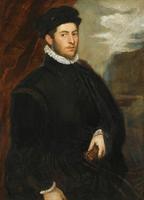
Portrait of a Nobleman
Tintoretto
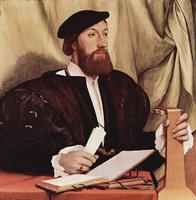
Unknown gentleman with music books and lute
Hans Holbein the Younger
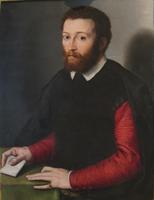
Portrait of a Man Holding a Letter
Francesco de' Rossi (Francesco Salviati), "Cecchino"
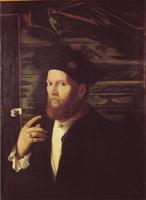
Ritratto Di Gentiluomo
Bartolomeo Veneto
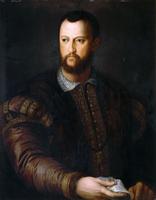
Portrait of Cosimo I De Medici
Alessandro Allori
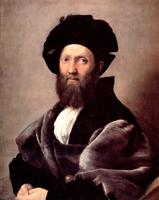
Portrait of Baldassare Castiglione
Raphael
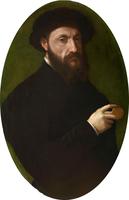
Portrait of a Gentleman
Francesco de' Rossi (Francesco Salviati), "Cecchino"
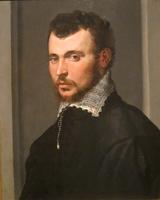
Portrait of a Young Man
Francesco de' Rossi (Francesco Salviati), "Cecchino"
Portrait of a man
Tintoretto
Portrait of Cosimo I De Medici
Alessandro Allori
Man from the Santacroce Family
Francesco de' Rossi (Francesco Salviati), "Cecchino"
Portrait of Gerolamo Mercuriale
Lavinia Fontana
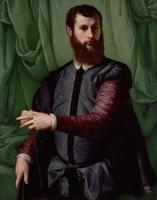
Portrait of a Man
Francesco de' Rossi (Francesco Salviati), "Cecchino"
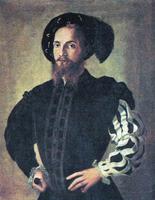
Cesare Borgia
Sebastiano del Piombo
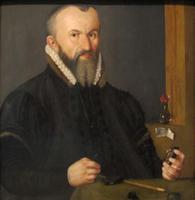
Ritratto Di Un Orefice Di Norimberga
Hans Hoffmann
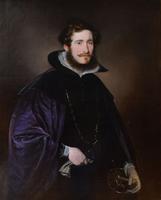
Count János Waldstein in Spanish costume
Friedrich von Amerling
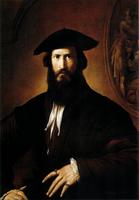
Portrait of a Man
Parmigianino
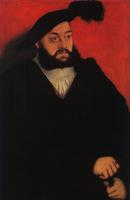
John, Duke of Saxony
Lucas Cranach the Elder