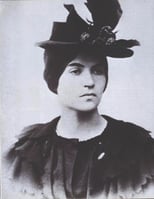
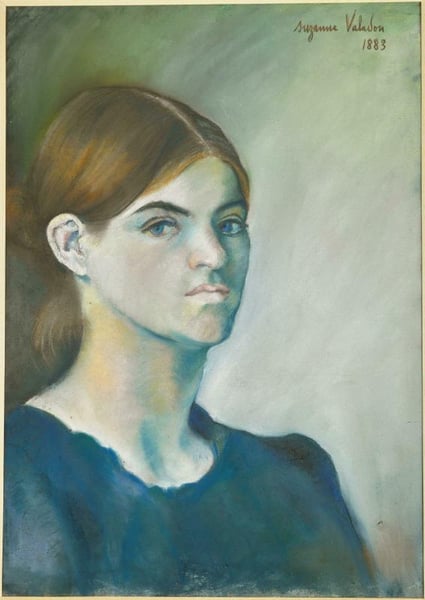
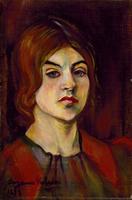
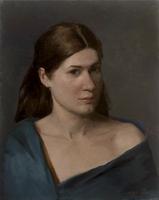
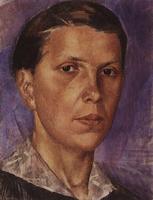
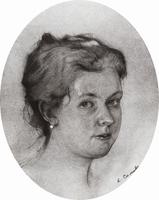
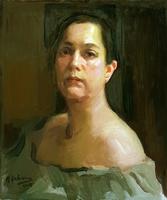
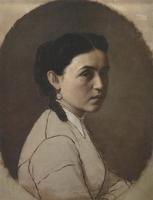
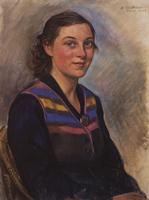
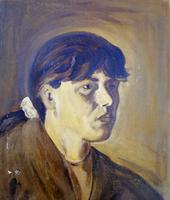
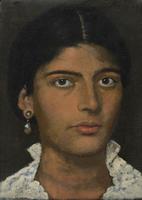
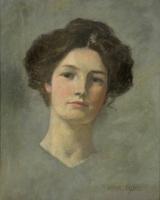
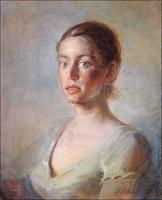
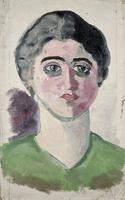
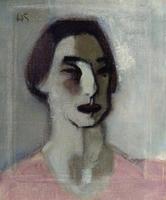
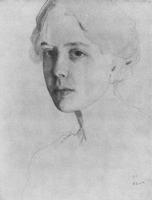
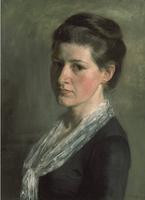
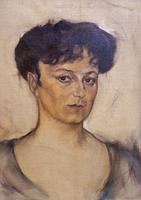
Suzanne Valadon’s Self-Portrait stands as a defiant declaration of artistic identity within the Post-Impressionist movement. Unlike many female artists of her era who were often relegated to the role of muse, Valadon—a former model for Renoir and Toulouse-Lautrec—turns the gaze inward, asserting her own creative agency. The work’s significance lies in its unflinching directness: Valadon employs bold contours and a muted, earthy palette that eschew idealization, focusing instead on psychological presence. Her sturdy, self-possessed posture and steady stare challenge conventional depictions of women as passive subjects. Within the Post-Impressionist context, this portrait synthesizes the emotional intensity of Van Gogh, the structural clarity of Cézanne, and the raw, unvarnished truth-telling that would later influence the Expressionists. It is a landmark not only in Valadon’s career but in the history of self-portraiture, proving that a woman could be both artist and subject on her own uncompromising terms.