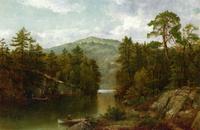
Expert Analysis of "View on Lake Winnipiseogee" by Thomas Cole
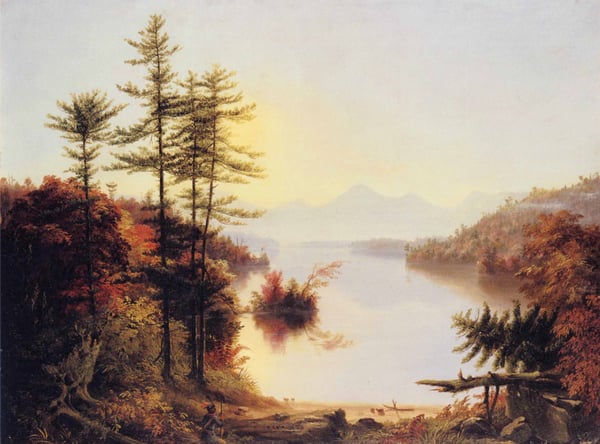
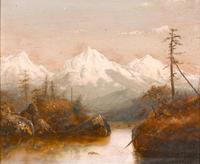
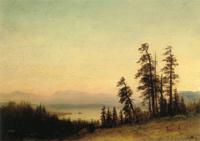
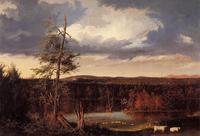
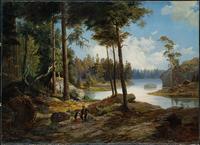
As a Romantic landscape, this work exemplifies the movement’s core ambition: to elevate nature into a vehicle for sublime experience and spiritual revelation. Thomas Cole, a leading figure of Romanticism, uses the scene to transcend mere topographical record. The lake—its expansive stillness, surrounding forest, and distant mountains—becomes a stage for the interplay of light, atmosphere, and scale, evoking both the grandeur of the American wilderness and the Romantic conviction that nature mirrors divine order.
The painting’s significance lies in how it triggers a contemplative, almost emotional response in the viewer. By emphasizing deep space, dramatic contrasts of light and shadow, and the infinitesimal human presence (if any), Cole aligns with Romanticism’s rejection of Enlightenment rationalism in favor of feeling, mystery, and the infinite. The work thus stands as a quintessential statement of Romantic landscape art: nature is not a passive backdrop but an active force that humbles, inspires, and connects humanity to something larger than itself.