Expert Analysis of Koloman Moser's Allegory of Ver Sacrum (1898)
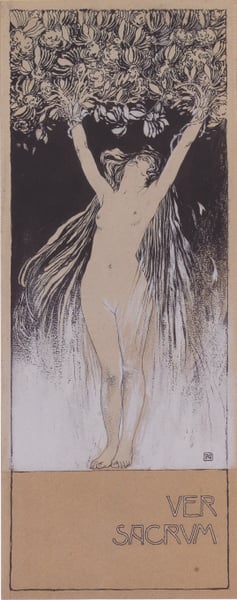
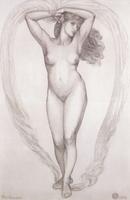
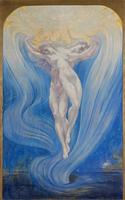
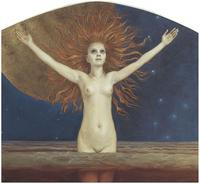
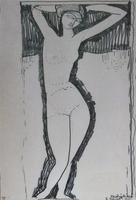
This sketch by Koloman Moser holds significant value within the Art Nouveau (Modern) movement as a preparatory work for the cover of Ver Sacrum (Sacred Spring), the official journal of the Vienna Secession. The publication itself was a defining platform for the avant-garde, and Moser – a founding member of the Secession – used this allegorical sketch to encapsulate the group's revolutionary spirit.
The work's genre as a sketch and study is crucial: it reveals the deliberate, linear elegance characteristic of Art Nouveau. Moser's flowing, organic lines and symbolic female figure embody the movement's rejection of historicism in favor of a unified, modern aesthetic rooted in nature and symbolism. The title Allegory of Ver Sacrum directly references the Secession's manifesto – a "sacred spring" of renewal – and the sketch becomes a visual declaration of artistic rebirth.
Its significance lies in Moser's role as a bridge between fine art and applied design, and in how this image served as a iconic emblem for a generation that redefined graphic arts. As an early, unfiltered sketch, it also offers insight into the creative process behind one of the most influential art periodicals of the fin de siècle.