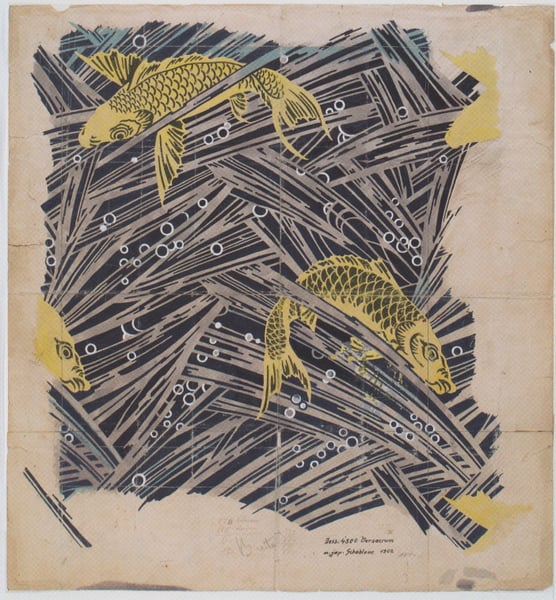
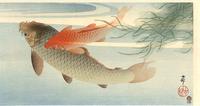
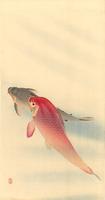
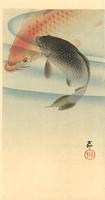
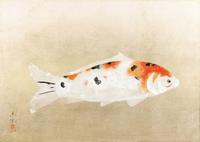
This fabric design by Koloman Moser, created for the Viennese textile manufacturer Backhausen, stands as a quintessential example of Art Nouveau applied to the decorative arts. Its significance lies in how it translates the period’s core aesthetic—a celebration of organic, flowing forms—into a functional, repeatable pattern for everyday use.
The "trout dance" motif captures Art Nouveau’s fascination with natural movement: the fish are rendered in stylized, rhythmic undulations that echo the whiplash curves typical of the style. Moser, a leading figure in the Vienna Secession, here demonstrates the movement’s ambition to erase the boundary between fine art and design, elevating a commercial textile to an expression of modern elegance. The work is significant because it embodies the Art Nouveau ideal of Gesamtkunstwerk (total work of art), where even a fabric pattern becomes a vehicle for artistic innovation and sensory harmony.