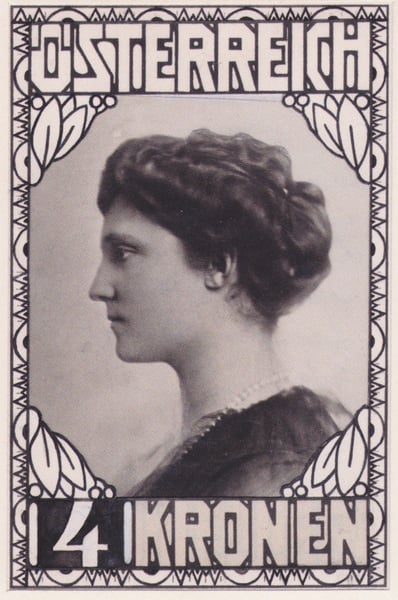
Stamp Design Empress Zita (not accepted)
Details
Expert analysis of Koloman Moser’s Stamp Design Empress Zita (not accepted)
Style: Art Nouveau (Modern) · Genre: design
Expert Analysis: "Stamp Design Empress Zita (not accepted)" by Koloman Moser
Koloman Moser’s Stamp Design Empress Zita (not accepted) stands as a compelling intersection of Art Nouveau elegance, modernist graphic innovation, and the political aesthetics of the late Austro-Hungarian Empire. Though ultimately rejected for official use, the work reveals Moser’s distinctive approach to functional design—an arena in which he, as a founding member of the Vienna Secession and the Wiener Werkstätte, excelled.
Stylistic and Compositional Significance
Moser transforms the conventional monarchical portrait into a tightly integrated decorative whole, typical of Art Nouveau’s desire to elevate everyday objects into fine art. The design likely employs his signature interplay of geometric framing, sinuous linework, and restrained floral or ornamental motifs—a visual language that balances regal dignity with modernist abstraction. The rejection suggests that Moser’s vision may have been too radical for official postal imagery, which typically demanded conservative, naturalistic portraiture. Instead, Moser treats the stamp as a miniature canvas, embedding Empress Zita within a stylized border that echoes the Secessionist principle of “Gesamtkunstwerk” (total work of art).
Historical and Cultural Context
Empress Zita (1892–1989) was the consort of Emperor Charles I, the last ruler of Austria-Hungary. Moser’s design dates from around 1916–1918, a period of war and imperial decline. A stamp bearing Zita’s image would have served as propaganda, yet Moser’s modern, linear treatment may have been deemed insufficiently reverent or too avant-garde for official state symbolism. The work therefore captures a tension between tradition and innovation that defined the twilight of the Habsburg monarchy and the rise of modern visual culture.
Significance Within Moser’s Oeuvre and Art Nouveau
Moser was a master of applied arts—from furniture and glass to graphic works—and this stamp design exemplifies his belief that even the smallest functional object deserves rigorous artistic attention. The fact it was “not accepted” only heightens its interest: it offers a glimpse of a road not taken in Austrian design, where a modern, poster-like sophistication could have been applied to state iconography. In its fusion of flat decorative planes, elegant typography (likely integrated into the layout), and subtle portrait handling, the work prefigures later developments in graphic design while remaining firmly rooted in the Symbolist and Secessionist currents of the early 1900s.
Conclusion
Stamp Design Empress Zita (not accepted) is a significant artifact of Art Nouveau’s ambition to reshape everyday official communication with modernist sensibility. It highlights Moser’s skill in condensing complex aesthetic ideas into a tiny, repeatable format and underscores the often-overlooked role of rejected designs in documenting the boundaries of state-approved taste. For historians and collectors, it is a rare testament to the moment when imperial authority met avant-garde design—and the latter failed to gain royal approval.
Visually similar
20 works with related composition and palette
Margaretta Drexel, Countess of Winchilsea and Nottingham
John Singer Sargent
Portrait de Sarah Bernhardt
Louise Abbéma
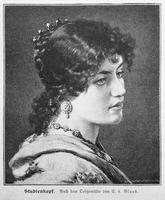
The Garden Arbor
Eugene de Blaas
Elizabeth Calvert
Benjamin West
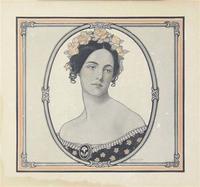
Portrait of a Woman
Guernsey Moore
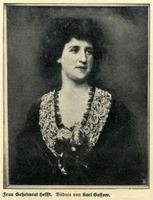
Lady Geheimrat Helfft
Karl Gussow
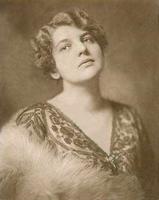
German Actress Lissy Lind Aka Lissy Krueger
Nicola Perscheid
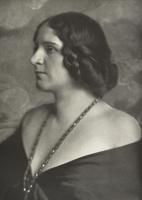
Elsa Laura Von Wolzogen (1876-1945), Deutsche Musikerin. Fotografie, Universitätsbibliothek Trier, Signatur Z13842b-1912.
Nicola Perscheid
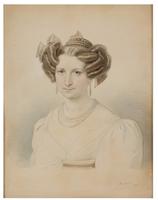
Austrian Family, The Mother
Josef Kriehuber
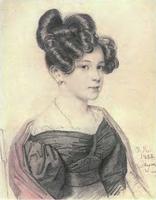
Portrait of Anna Olenina
Orest Kiprensky
Duchesse Marguerita De Madrid
Felix Nadar
Apollonia Wodehouse (née Nourse)
Charles Turner
Mrs. George Swinton
John Singer Sargent
Apollonia Wodehouse (née Nourse)
Charles Turner
Portrait of the daughter Mary Stuck
Franz Stuck
Duchesse Marguerita De Madrid
Felix Nadar
Rosalind
Edward Robert Hughes
Tropinin Anna Ivanovna
Vasily Tropinin
Portrait of Aflaia Coronio
Dante Gabriel Rossetti
Portrait of Mrs Georgin A Fernandez
Dante Gabriel Rossetti