Expertenanalyse zu David Alfaro Siqueiross King Cuauhtemoc
Stil: Muralism · Genre: symbolic painting
Expert Analysis of "King Cuauhtemoc" by David Alfaro Siqueiros
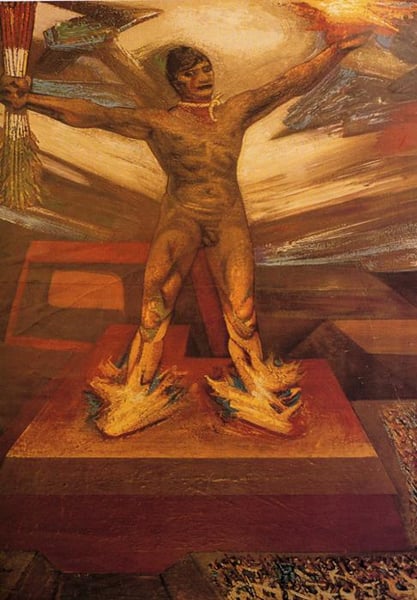
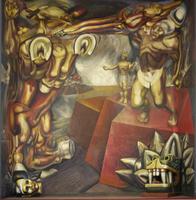
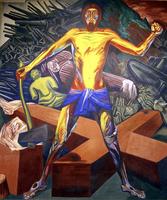
David Alfaro Siqueiros’ King Cuauhtemoc stands as a powerful emblem of Mexican Muralism, a movement dedicated to creating a public, politically charged art that reasserts indigenous identity and confronts colonial history. Executed in a symbolic painting genre, the work transforms the last Aztec emperor—Cuauhtemoc—from a historical figure into an enduring icon of resistance and dignity.
Significance within Muralism and its Period:
-
Indigenous Reclamation: At a time when post-Revolutionary Mexico sought to forge a unified national identity, Siqueiros elevates Cuauhtemoc not as a defeated ruler but as a stoic, almost monumental king. This directly challenges the Eurocentric narratives that had long cast indigenous civilizations as conquered victims. Instead, Cuauhtemoc symbolizes the unbroken spirit of Mesoamerican cultures—a core project of the Muralist movement.
-
Siqueiros’ Revolutionary Aesthetic: Unlike the more narrative, flattened compositions of Diego Rivera, Siqueiros employed radical perspective, dynamic diagonals, and aggressive foreshortening—techniques drawn from both Renaissance frescoes and modern cinema. In King Cuauhtemoc, this translates into a figure that seems to thrust forward from the picture plane, confronting the viewer with an overwhelming physical and psychological presence. The use of symbolic color—rich, earthy tones against stark contrasts—further amplifies the emotional gravity, linking Cuauhtemoc to both the land and the blood of resistance.
-
Political Urgency: Siqueiros was a militant communist who believed art should “stop being merely a decoration and become an instrument of struggle.” By depicting Cuauhtemoc not as a passive martyr but as a defiant king, the work functions as a call to contemporary Mexicans to reclaim their heritage and resist neocolonial oppression. The king’s armored helmet and rigid posture evoke an undefeated warrior, directly tying the pre-Columbian past to the ongoing fight for social justice in the 20th century.
Why It Matters:
As a work of symbolic painting within Muralism, King Cuauhtemoc exemplifies how the movement used allegory to rewrite history from an indigenous perspective. Siqueiros’ innovative use of dynamic composition and industrial materials (such as synthetic paints and spray guns) also pushed the boundaries of public art, influencing later generations of muralists and graphic artists. The painting remains a seminal statement on cultural resistance, memory, and the power of art to transform historical trauma into national pride.
Visuell ähnlich
20 Werke mit ähnlicher Komposition und Farbpalette
Lied I
Albert Bloch
Guyasdoms D'Sonoqua
Emily Carr
The light
Koloman Moser
Satan smiting Job with boils
William Blake
Young Bathers
Georg Pauli
Condemnation
Max Oppenheimer
The Sun at His Eastern Gate
William Blake
Exemption
Jean Delville
Illustration to Milton`s On the Morning of Christ`s Nativity
William Blake
Subterranean Forces
Diego Rivera

Mankind's Struggle for Lasting Peace (detail)
Vela Zanetti
Mural
David Alfaro Siqueiros
Glad Day or The Dance of Albion
William Blake
Satan Calling Up his Legions
William Blake
Iconic views of Toledo
Andre Masson
Striker
Carlos Orozco Romero
Mens Sana in Corpore Sano
Georg Pauli
Atleter
Eugène Jansson
Illustration to Dante's Divine Comedy, Hell
William Blake
Panel 19. Modern Migration of the Spirit - The Epic of American Civilization
Jose Clemente Orozco