Analisi esperta di Place de la Concorde di Antoine Blanchard
Stile: Impressionism · Genere: cityscape
Expert Analysis: “Place de la Concorde” by Antoine Blanchard
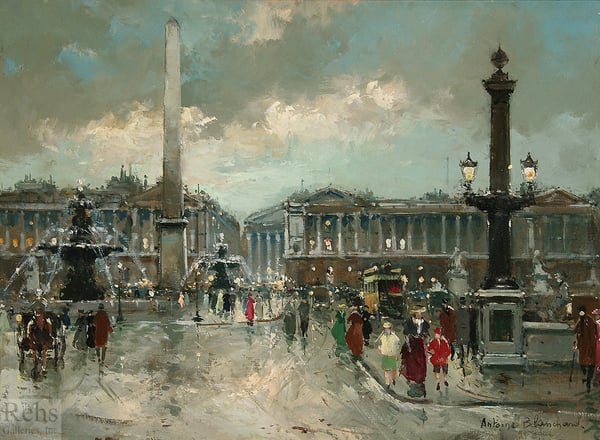
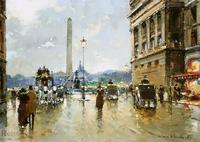
Antoine Blanchard’s Place de la Concorde is a quintessential example of late Impressionist cityscape painting, executed in the mid-20th century yet steeped in the nostalgia of Belle Époque Paris. While the artist worked decades after the original Impressionist movement, his style adheres closely to its core principles: capturing the transient effects of light, atmosphere, and movement within an urban setting.
What makes this work significant within its style and period:
-
Mastery of atmospheric light and weather:
Blanchard’s treatment of the famous square—with its obelisk, fountains, and surrounding façades—demonstrates the Impressionist fascination with changing weather conditions. Rain-washed cobblestones reflect the glow of gas lamps and carriage lamps, while soft, diffuse clouds filter the daylight. The use of broken, rapid brushstrokes (a hallmark of Impressionism) creates a shimmering, tactile surface that mimics the flicker of light on wet surfaces. -
Dynamic composition and perspective:
The painting places the viewer roughly at street level, looking across the vast, open space of the Place de la Concorde. Blanchard draws the eye along a diagonal line formed by the trafic of horse-drawn carriages and early automobiles, leading toward the obelisk and the fountains. This diagonal thrust, combined with the receding rows of trees and buildings, gives the scene a sense of depth and motion—a modern take on Impressionism’s interest in the fleeting, “slice of life” moment. -
Nostalgia for a bygone Paris:
Although executed in the mid-1900s, Place de la Concorde intentionally evokes the Paris of the 1890s–1910s: a world of top hats, long skirts, horse cabs, and elegant promenades. This romanticized backward glance aligns with the later phase of Impressionism, when artists like Blanchard and Édouard Cortès devoted themselves to preserving the visual poetry of old Paris. The work is significant precisely because it merges Impressionist technique with historical memory, offering a stylized, idealized view that feels both timeless and emotionally resonant. -
Color harmony and tonal contrasts:
Blanchard’s palette is restrained yet rich: muted greys, soft blues, warm ochres, and touches of crimson in the flags and awnings. The overall gray-blue tonality of a rainy day is punctuated by warm yellow highlights from the streetlamps and the golden stone of the buildings. This careful balancing of cool and warm tones is a hallmark of Impressionist color theory, rooted in the observation of natural light. -
Social and pictorial storytelling:
The painting is not merely a topographical record; it is a stage for Parisian life. Small figures—strolling couples, children, carriage drivers—are rendered with loose, suggestive dabs of paint. They convey the energy and rhythm of a cosmopolitan hub without demanding individual identification. This aligns with the Impressionist goal of capturing the essence of modern life through spontaneity and sensory immediacy.
In summary:
Place de la Concorde by Antoine Blanchard is significant as a late Impressionist cityscape that synthesizes the movement’s core techniques—broken color, atmospheric effects, and an emphasis on transient light—with a deeply nostalgic vision of Paris. It stands as a beautifully crafted homage to the Belle Époque, demonstrating how Impressionist principles could be adapted to celebrate urban heritage long after the movement’s initial heyday.
Visivamente simili
20 opere con composizione e palette affini
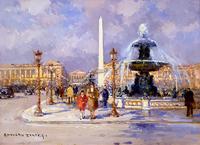
Place de la Concorde
Edouard Cortes
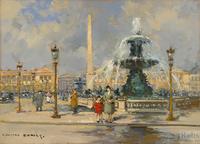
Fountain on Place de la Concorde
Edouard Cortes
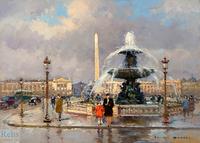
Fountain on Place de la Concorde
Edouard Cortes
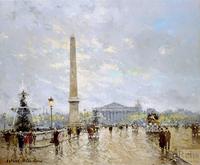
Place de la Concorde
Antoine Blanchard
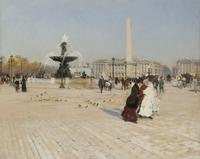
A corner of the Place de la Concorde in Paris
Giuseppe De Nittis
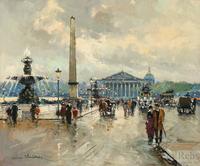
Place de la Concorde
Antoine Blanchard
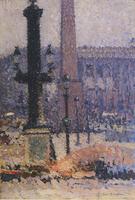
Square Concorde
Henri Martin
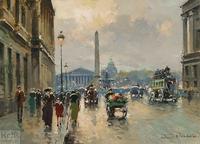
Place de la Concorde
Antoine Blanchard
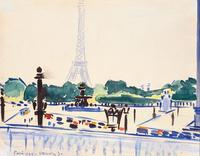
Vaszary János, Konkorde Tér 1929
Vaszary János
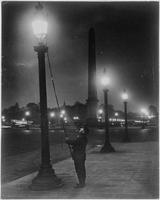
Allumeur de réverbères, place de la Concorde
Brassai
Place de la Concorde
Antoine Blanchard
Concorde Square
Henri Martin
Rue Royale Concorde
Edouard Cortes
Place De La Concorde, Paris
Louis Hayet
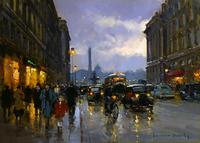
Place de la Concorde
Edouard Cortes
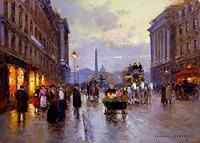
Rue Royale Concorde
Edouard Cortes
City-gate of Paris
Grant Wood
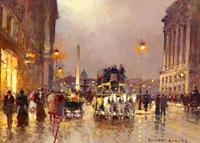
The Concorde Square, Le Soir
Edouard Cortes
Old Capitol that was lit for about one hundred steps
Giovanni Battista Piranesi
Matin d’avril
Louise Abbéma