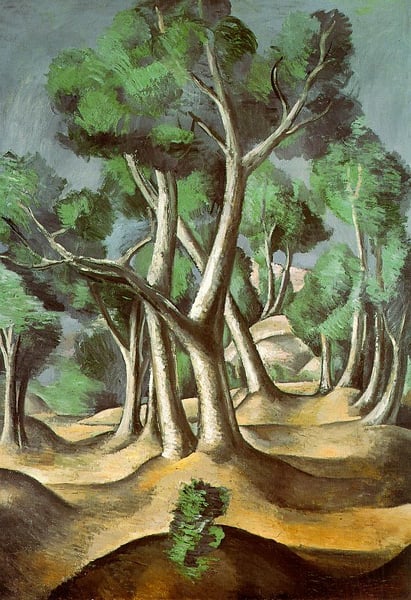
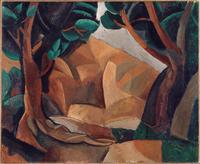
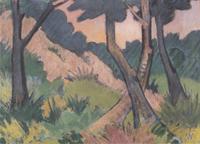
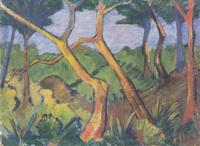
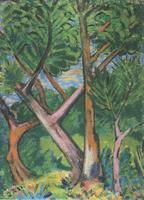
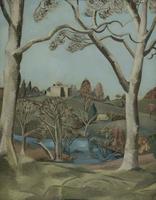
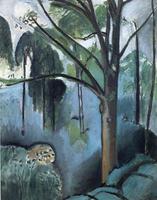
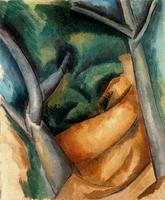
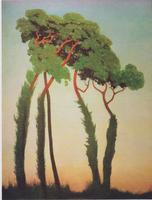
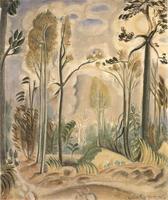
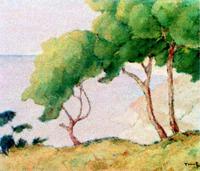
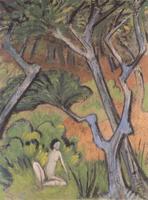
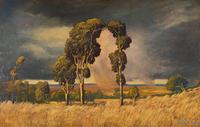
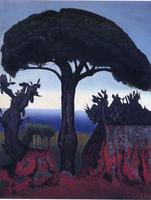
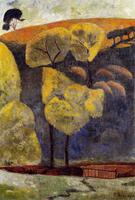
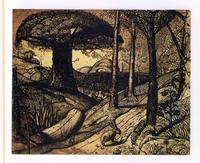
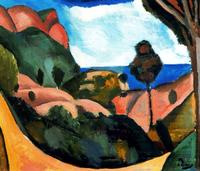
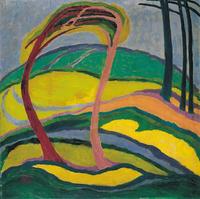
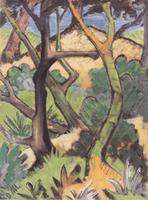
“The Grove” by André Derain is a landscape executed in the Post-Impressionist style. Within this context, the work is significant for how it exemplifies the movement’s departure from naturalistic representation toward a more expressive, structurally deliberate treatment of nature. As a Post-Impressionist landscape, it likely prioritizes bold color, rhythmic linework, and a sense of emotional or symbolic atmosphere over simple topographical accuracy. Derain, a key figure bridging Post-Impressionism into Fauvism, here uses the grove—a traditional motif—not as a literal description, but as a vehicle for formal experimentation, emphasizing the painter’s subjective response to the scene. This makes “The Grove” a telling example of how Post-Impressionist artists redefined landscape painting as a discipline of personal vision and compositional logic.