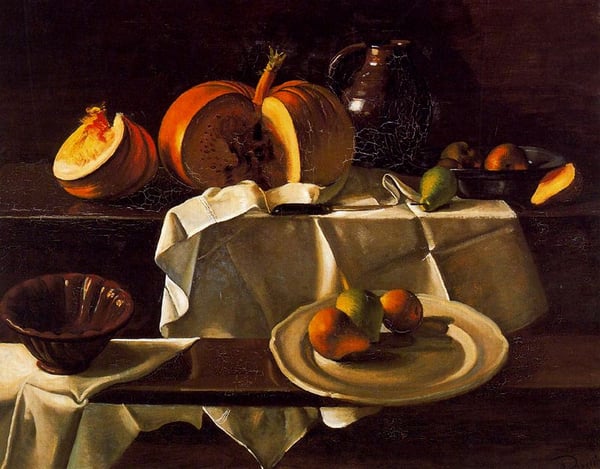
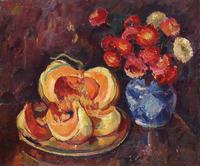
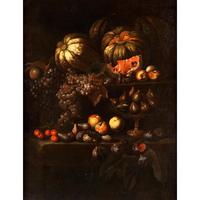
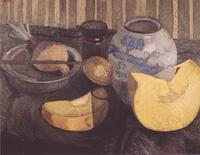
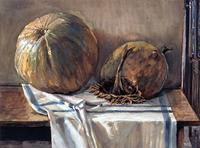
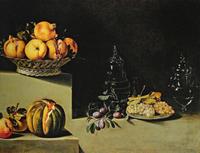
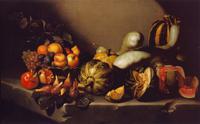
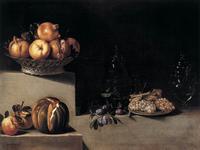
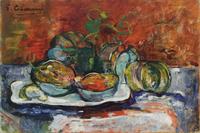
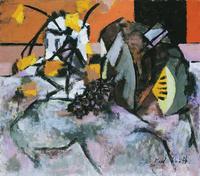
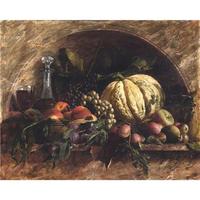
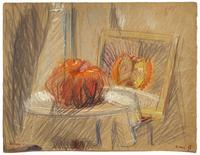
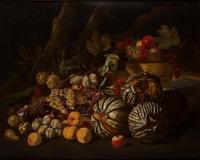
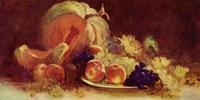
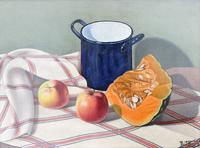
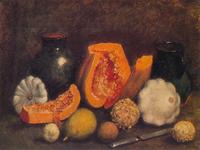
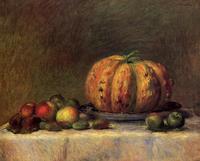
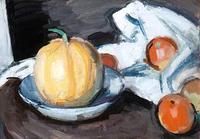
In "The Still life with Pumpkin," André Derain adapts the Neoclassical style to the still-life genre, marking a significant departure from his earlier Fauvist palette. The painting achieves Neoclassical clarity through balanced composition, restrained color, and a focus on form over expressive distortion. The pumpkin itself becomes a solid, sculptural object—a nod to classical stability and order—while the arrangement echoes the structured, harmonious groupings found in 17th-century Dutch still lifes reinterpreted through a modern lens. This work is significant as it demonstrates Derain’s conscious return to disciplined, rational composition after the emotional intensity of Fauvism, aligning with the broader early-20th-century revival of classical principles. It proves that Neoclassicism could reinvigorate even humble subjects with timeless dignity and formal rigor.