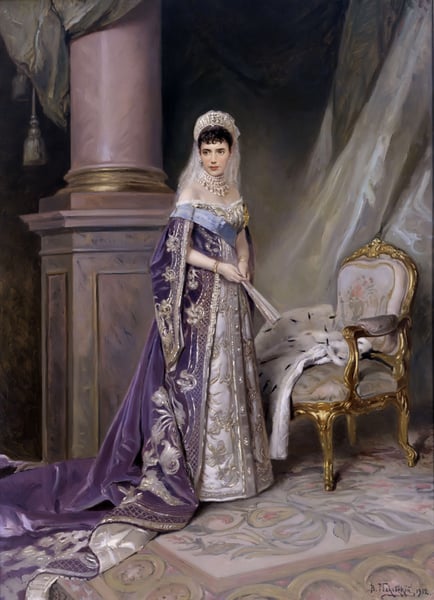
Empress Maria Feodorovna
Dettagli
Analisi esperta di Empress Maria Feodorovna di Vladimir Makovsky
Stile: Realism · Genere: portrait
Expert Analysis: "Empress Maria Feodorovna" by Vladimir Makovsky (Realism, Portrait Genre)
Vladimir Makovsky’s portrait of Empress Maria Feodorovna stands as a masterful exemplar of Russian Realism in late 19th-century portraiture. As a prominent member of the Peredvizhniki (The Wanderers), Makovsky rejected the stiff, idealized conventions of academic portraiture in favor of a truthful, psychologically nuanced depiction of his subjects. This work’s significance lies precisely in how it balances the official grandeur expected of a royal portrait with the intimate human presence that defined the Realist ethos.
Key Artistic Features (informed by the Realist style):
- Psychological Depth: Rather than a remote icon of authority, Makovsky presents the Empress with a subtle, contemplative expression—a hallmark of Realism’s focus on the interior life of the sitter. The slight turn of the head and the soft focus of her gaze suggest a moment of private reflection amid public duty.
- Textural Virtuosity: Makovsky’s brushwork captures the luxurious textures of her gown and jewelry with meticulous precision, yet never falls into mere decorative show. The rendering of silk, velvet, and pearls serves the broader Realist goal of conveying material truth as a window into the subject’s social station and personality.
- Historical Context: Maria Feodorovna (born Princess Dagmar of Denmark) was Empress consort of Alexander III and mother of the last Tsar, Nicholas II. Painted during a turbulent period in Russian history, the portrait subtly hints at the weight of imperial responsibility. Unlike earlier pomp-filled state portraits, Makovsky’s Realist approach humanizes the Empress, making her both a figure of immense power and a woman whose dignity carries a trace of melancholy.
Significance within Realism and the Portrait Genre: Makovsky’s portrait is significant because it exemplifies the Peredvizhniki’s core mission: to bring truth to art, even when the subject is royalty. In an era when Russian portraiture often veered between theatrical gallantry and sentimental domesticity, Makovsky secures a middle path—one that honors the sitter’s official status while adhering to the Realist demand for verisimilitude and emotional authenticity. The work therefore stands as a document not only of the Empress’s appearance but of the shifting social and aesthetic values of late imperial Russia, where the individual, even a crowned head, could be seen with an unflinching, empathetic eye.
Museum / Gallery
Visivamente simili
20 opere con composizione e palette affini
Portrait of Louise of Hesse-Kassel (1817-1898), Queen of Denmark
Elisabeth Jerichau-Baumann
Queen Elisabeth of Hungary and Bohemia
Bertalan Szekely
Elizabeth II, in Full Regalia on 7 April 1964, Granting the Charter to the Newly Created London Borough of Kingston Upon Thames (the Right to Be a 'Royal' Borough)
Arthur Pan
Portrait of Augusta of Saxe Weimar Eisenach
Franz Xaver Winterhalter
Portrait of Queen Wilhelmina in Coronation Robes
Thérèse Schwartze
Portrait of Madame Albert Cahen d'Anvers
Leon Bonnat
Alexandra Feodorovna Empress of Russia
Christina Robertson
Portrait of Alexandra of Denmark
Luke Fildes
Portrait of Maria Fyodorovna, born Princess Dagmar of Denmark , wife of russian tsar Alexander III
Ivan Kramskoy
Queen Adelaide
John Simpson
Portrait of Empress Alexandra Fedorovna
Christina Robertson
Portrait of Queen Isabella II of Spain and her daughter Isabella
Franz Xaver Winterhalter
Portrait of Pauline Bonaparte
Marie-Guillemine Benoist
Queen Victoria
Franz Xaver Winterhalter
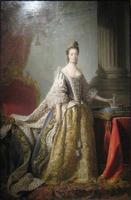
Queen Charlotte
Allan Ramsay
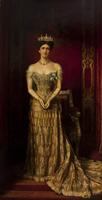
Mary Victoria Leiter
William Logsdail
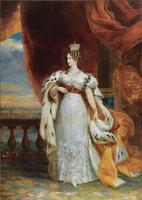
Empress Alexandra Feodorovna at the Coronation of Her Husband
George Dawe
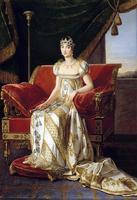
Portrait of Pauline Bonaparte princess Borghese
Marie-Guillemine Benoist
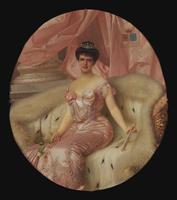
Portrait of Amélie d'Orléans
Vittorio Corcos
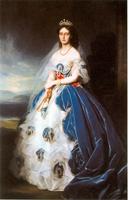
Portrait of the Queen Olga of Württemberg
Franz Xaver Winterhalter