Expert analysis of Vladimir Makovsky’s Miracle at Cana
Style: Realism · Genre: religious painting
Expert Analysis: "Miracle at Cana" by Vladimir Makovsky
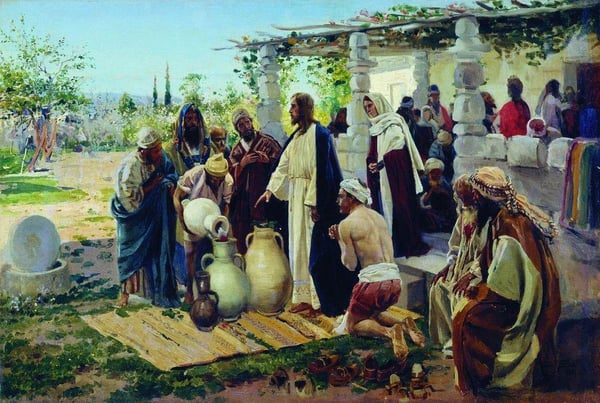
Vladimir Makovsky, a prominent Russian Realist painter of the late 19th century, here applies the tenets of Realism to a classic religious subject—the wedding feast at Cana where Christ turns water into wine. Normally associated with intimate, everyday scenes of Russian life, Makovsky’s turn to a biblical miracle marks a significant fusion of the sacred with the secular, democratic spirit of Realism.
Significance within Realism and religious painting:
- Demystifying the divine: Makovsky resists the grand, theatrical compositions favored by earlier religious painters. Instead, he treats the miracle as a candid, domestic event. The figures are ordinary people—peasants, servants, and wedding guests—rather than idealized saints. Their expressions are not awestruck but curious, weary, or simply engaged in the mundane bustle of a feast. This humanizes the miracle, making it relatable to a contemporary audience.
- Realist technique as theological commentary: By employing the precise observation of light, texture, and authentic costumes characteristic of his genre scenes, Makovsky argues that the sacred can be found in the ordinary. The table is laden with humble pottery and bread; the wine jars are utilitarian. This stark, unglamorous setting underscores the miracle’s intrusion into everyday life—a key Realist concern.
- Contrast with Academic tradition: Most 19th-century religious art still adhered to Neoclassical or Romantic ideals. Makovsky’s approach challenges that hierarchy, asserting that a religious painting need not be idealized to convey spiritual truth. Instead, truth is located in the specific, the local, and the human.
Overall significance:
“Miracle at Cana” stands as a bold reimagining of a biblical story through a Realist lens. It demonstrates that Realism was not limited to social commentary or secular subjects; it could also refresh and deepen religious narrative by stripping away artifice and focusing on the shared humanity of the event. This work is a rare and valuable bridge between the sacred iconography of the past and the emerging modern sensibility that sought authenticity in every aspect of life.
Museum / Gallery
Visually similar
20 works with related composition and palette
Moses Strikes the Rock
James Tissot
Construction of the Cross
Wilhelm Kotarbinski
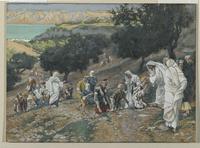
Jesus Heals the Blind and Lame on the Mountain
James Tissot
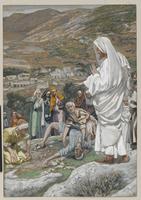
The Possessed Boy at the Foot of Mount Tabor
James Tissot
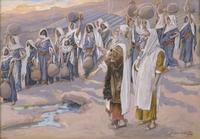
Moses Smiteth the Rock in the Desert
James Tissot
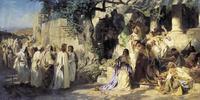
Christ and Sinner
Henryk Siemiradzki
The Lord's Prayer
James Tissot
Healing Hands
Adam Abram
Jesus at Bethany
James Tissot
Christ in the House of Martha and Mary
Henryk Siemiradzki
Mary Magdalene`s Box of Very Precious Ointment
James Tissot
The Washing of the Feet
James Tissot
A depiction of Jesus and the woman taken in adultery
Vasily Polenov
Elijah Before King Ahab
John Absolon
Abraham's Servant Meeteth Rebecca
James Tissot
Jacob Sees Esau Coming to Meet Him
James Tissot
The Primacy of Saint Peter
James Tissot
What People Think about Me
Vasily Polenov
The Good Samaritan
Vasily Surikov
The Accursed Fig Tree
James Tissot