Análisis experto de Portrait of Otto Shmidt de Mikhail Nesterov
Estilo: Realism · Género: portrait
Expert Analysis of "Portrait of Otto Shmidt" by Mikhail Nesterov
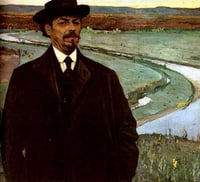
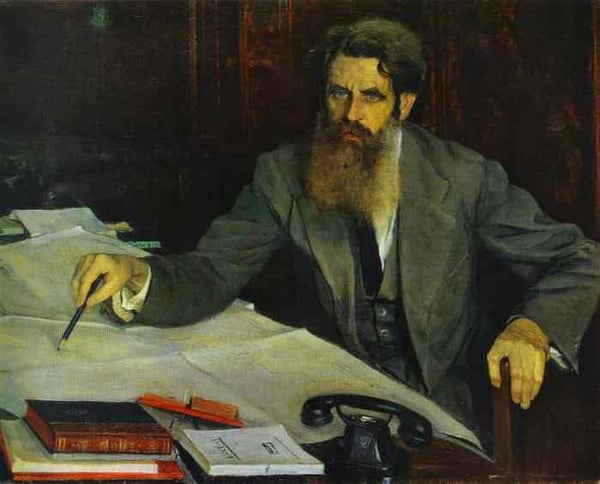
Mikhail Nesterov’s Portrait of Otto Shmidt stands as a compelling example of Soviet Realist portraiture, merging the artist’s lyrical spiritualism with the era’s demand for heroic, psychologically penetrating depictions of state figures. Painted in 1937—the height of Stalinist socialist realism—the work transcends mere official likeness by infusing the sitter with intellectual gravitas and quiet resilience.
Significance within Realism and Period Context:
-
Psychological Depth over Idealization: Unlike many contemporary socialist realist portraits that emphasized bombastic heroism, Nesterov focuses on Shmidt’s intense, contemplative gaze and furrowed brow. The subject—a renowned Arctic explorer, mathematician, and organizer—is shown not in triumphant pose but in a moment of internal reflection. This choice aligns with Nesterov’s earlier pre‑revolutionary interest in the soul’s inner life, here adapted to a secular, scientific hero.
-
Mastery of Realist Technique: The painting’s restrained palette—deep blues, greys, and warm flesh tones—and meticulous rendering of light on the face and hands demonstrate Nesterov’s academic realism. Yet the loose, almost impressionistic strokes in the background and clothing create a tension between photographic clarity and painterly spontaneity, elevating the work beyond mere reportage.
-
Bridging Eras: Nesterov, born in 1862, was a leading figure of Russian religious and romantic painting (e.g., The Vision of the Youth Bartholomew). His later shift to Soviet portraiture—most famously of fellow intellectuals and scientists—represents a crucial artistic adaptation. This portrait of Shmidt is significant because it retains Nesterov’s characteristic empathy and compositional harmony while fully serving the ideological purpose of celebrating the “New Soviet Man” as a thinking, heroic individual.
Why It Matters: The portrait is a masterclass in psychological realism, proving that state‑commissioned works could achieve genuine artistic depth. It captures a pivotal moment when Soviet art reconciled personal introspection with collective ambition, making it a landmark not only in Nesterov’s late career but in the broader history of 20th‑century portraiture.
Museum / Gallery
Visualmente similares
20 obras con composición y paleta relacionadas
Antonin Proust
Anders Zorn
Portrait of the writer D.L. Mordovtsev
Boris Kustodiev
Portrait of Nikolai Andreyevich Rimsky-Korsakov
Valentin Serov
Emile Verhaeren Writing
Theo van Rysselberghe
Portrait of doctor A. D. Yesersky
Vasily Surikov
Emile Verhaeren in His Study
Theo van Rysselberghe
Portrait of Alexander Turchaninov
Valentin Serov
Portrait of Stjepan Nikolsky, uncle of the artist
Boris Kustodiev
Lord Furness of Grantley (1852–1912)
Herbert Arnould Olivier
Portrait of the Artist A. P. Bogolubov
Ilya Repin
Edmond Duranty
Edgar Degas
Portrait of the Artist I.S. Ostroukhov
Valentin Serov
Portrait of Louis Loucheur
Edouard Vuillard
Sketch to portrait of Georg Brandes
Peder Severin Kroyer
Portrait of a Businessman K. Artsybushev
Mikhail Vrubel
Portrait of Ivan Mikhaylovich Sechenov, Russian physiologist
Ilya Repin
The Count of Artal
Joaquín Sorolla
Portrait of Wilhelm von Bitner
Ilya Repin
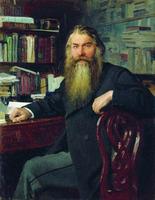
Portrait of the historian and archaeologist Ivan Egorovich Zabelin
Ilya Repin
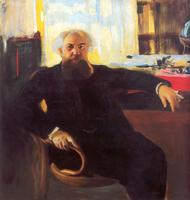
Adrian Prakhov
Oleksandr Murashko