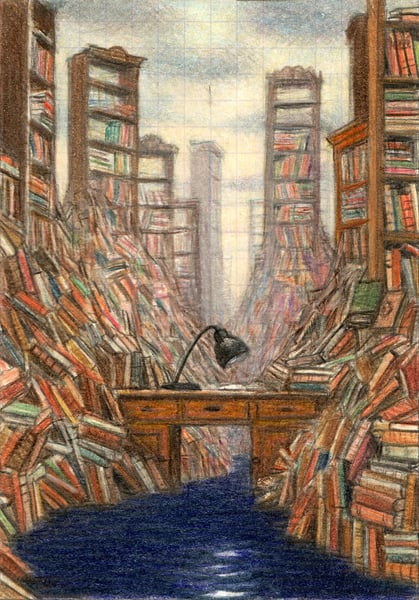
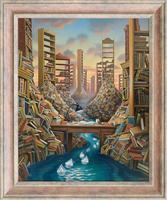
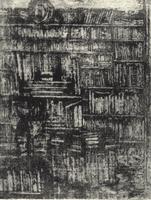
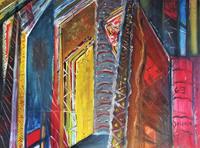
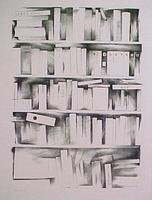
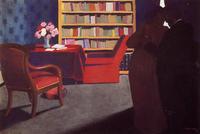
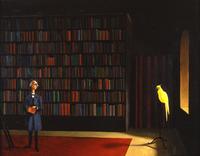
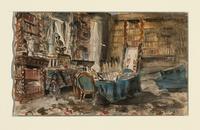
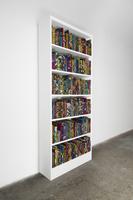
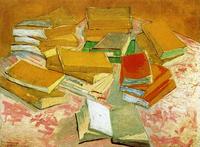
In "Ink Valley," Jacek Yerka combines the dreamlike logic of Surrealism with the intimate framework of the interior genre. The title itself suggests a hybrid space—a "valley" conjured from or contained within a domestic realm, characteristic of Surrealism’s fascination with displacing familiar objects into uncanny contexts. As an interior, the scene likely transforms a confined, everyday room into a vast, imaginative landscape, blurring boundaries between inside and outside. This fusion is significant because it exemplifies how Surrealist interiors can serve as portals to subconscious worlds: the ink (a medium of creation) becomes a topography, turning the act of drawing or writing into a tangible, inhabitable space. Yerka’s work thus stands out for its ability to make the interior both personal and universal—a private chamber that opens onto an infinite, fluid geography, questioning the very nature of reality and perception.