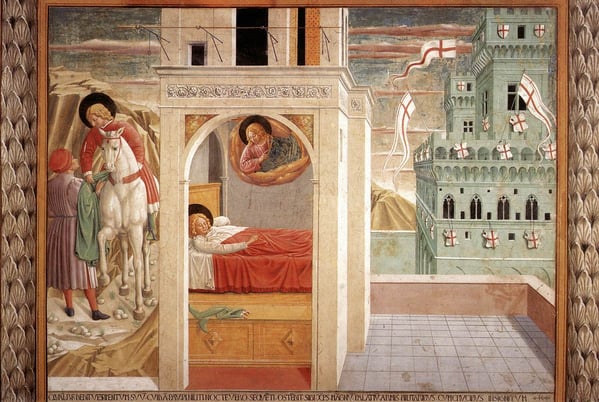
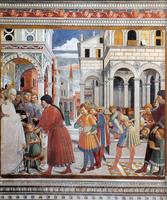
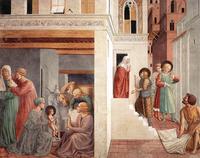
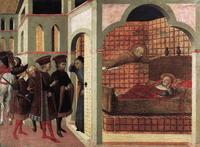
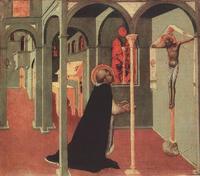
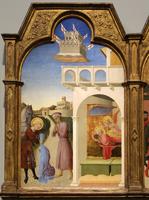
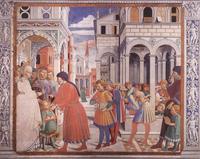
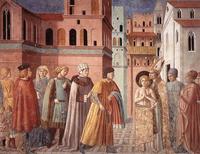
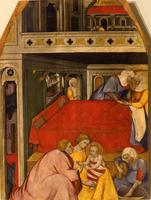
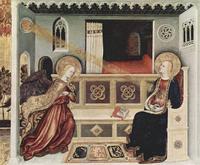
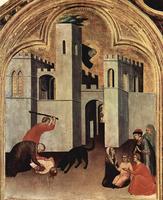
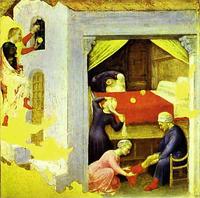
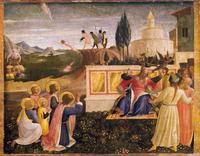
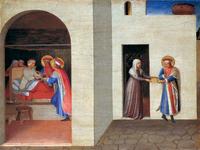
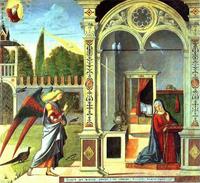
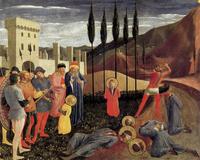
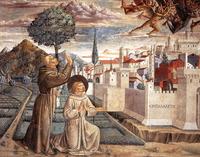
This religious painting by Benozzo Gozzoli is significant as an exemplar of Early Renaissance narrative clarity and symbolic integration. The work combines two distinct episodes from the life of St. Francis—his renunciation of worldly wealth (shown in the act of giving away his clothes) and the visionary scene of the Church Militant and Triumphant—within a single compositional frame. This duality reflects the period’s interest in merging earthly, historical moments with spiritual, transcendent truths, a hallmark of Early Renaissance devotional art. The careful rendering of figures, attention to gesture, and the use of continuous narrative allow the viewer to follow the saint’s journey from material rejection to divine vision, while the overall structure emphasizes the Church’s dual nature: struggling on earth and triumphant in heaven. Gozzoli’s work here contributes to the era’s growing naturalism and the tradition of hagiographic storytelling that sought to make sacred history both accessible and edifying.