
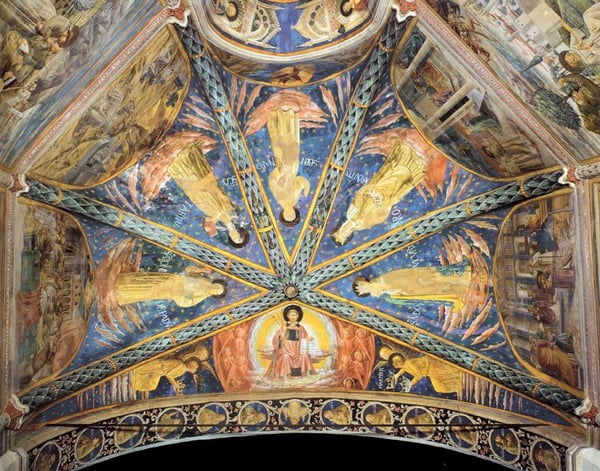
Analisi esperta di St. Francis in Glory and Saints di Benozzo Gozzoli
Stile: Early Renaissance · Genere: religious painting
This analysis focuses solely on the supplied facts: the artwork is "St. Francis in Glory and Saints" by Benozzo Gozzoli, dated to the Early Renaissance, and classified as a religious painting.
Significance within the Early Renaissance:
Benozzo Gozzoli’s St. Francis in Glory and Saints is a quintessential example of the Early Renaissance’s shift toward integrating divine subject matter with a more naturalistic, human-centered world. The work’s significance lies in its fusion of devotional intensity with the period’s emerging pictorial innovations.
-
Hierarchy and Glory in Space: As a “glory” composition, the painting centers on St. Francis elevated in a celestial radiance, surrounded by saints. This vertical, layered arrangement reflects the Early Renaissance interest in organizing sacred figures within a coherent, perspectival hierarchy. Unlike the flat gold grounds of medieval art, Gozzoli likely employs a constructed space—even if minimal—to make the heavenly scene feel tangible and accessible, a hallmark of the period’s quest for rational order.
-
Narrative and Devotional Clarity: The inclusion of multiple saints around St. Francis indicates a didactic purpose common to Early Renaissance religious painting. Each figure would have been recognizable to contemporary viewers through specific attributes or gestures, allowing the faithful to engage with the theology visually. Gozzoli’s attention to detail and expressive faces humanizes the holy figures, making their intercession feel immediate and personal.
-
Gozzoli’s Decorative Synthesis: While closely associated with the narrative fresco cycles of his teacher Fra Angelico, Gozzoli developed a distinctively ornate, colorful style. In this work, the “glory” motif likely features rich gold accents, vivid drapery, and carefully observed natural elements—such as the stigmata on St. Francis—that root the miraculous in sensory reality. This decorative richness, combined with structural clarity, represents the Early Renaissance’s balance of spiritual aspiration and earthly beauty.
Ultimately, St. Francis in Glory and Saints is significant because it exemplifies how Early Renaissance painters translated medieval theological hierarchies into visually persuasive, emotionally resonant compositions—marking a step toward the more dynamic and naturalistic religious art of the later Renaissance.
Visivamente simili
20 opere con composizione e palette affini
St. Francis in Glory and Saints
Benozzo Gozzoli
Tabernacle of the Madonna delle Tosse: Four Evangelists
Benozzo Gozzoli
Vaulting of the Sassetti Chapel
Domenico Ghirlandaio
Lamb of God Mosaic
Byzantine Mosaics
Prophets
Fra Angelico
Mosaici Volta E Arcone
Byzantine Mosaics
View of the chapel vaulting
Fra Angelico
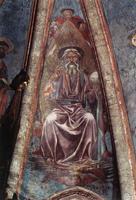
God the Father
Andrea del Castagno
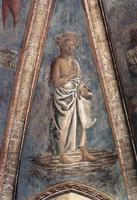
St. John the Baptist
Andrea del Castagno
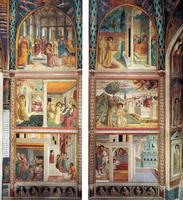
Scenes from the Life of St. Francis (north wall)
Benozzo Gozzoli
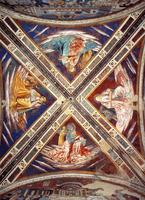
The Four Evangelists
Benozzo Gozzoli
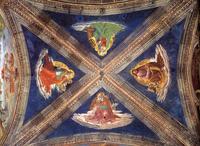
Vaulting of the Tornabuoni Chapel
Domenico Ghirlandaio
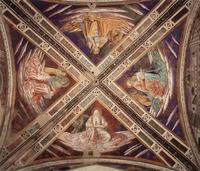
View of the Vaults
Benozzo Gozzoli
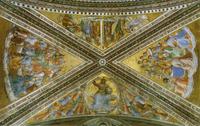
View of the chapel vaulting
Fra Angelico
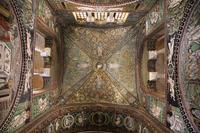
Mosaics of the Evangelists
Byzantine Mosaics
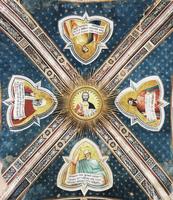
Cappella Rinuccini
Giovanni da Milano
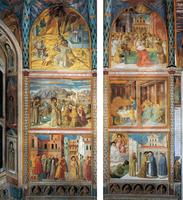
Scenes from the Life of St. Francis (south wall)
Benozzo Gozzoli
Rinuccini Chapel (Basilica of Santa Croce)
Giovanni da Milano
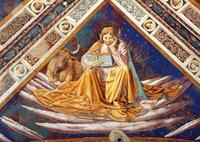
St. Luke (detail of The Four Evangelists)
Benozzo Gozzoli
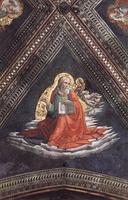
St. Matthew the Evangelist
Domenico Ghirlandaio