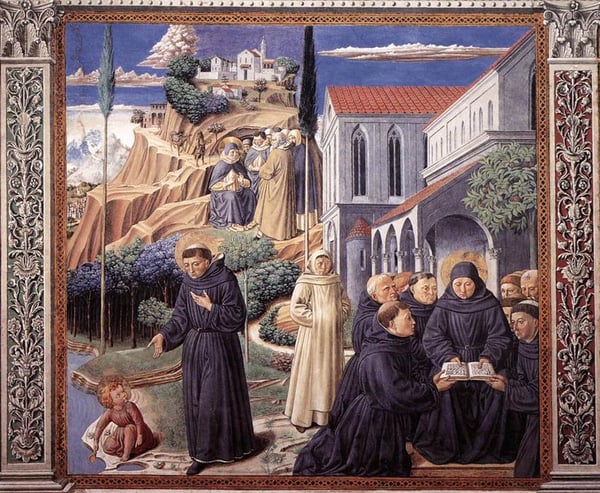
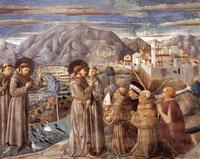
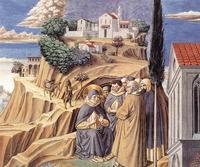
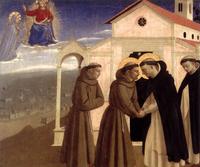
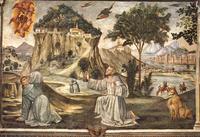
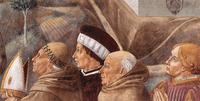
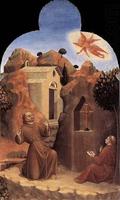
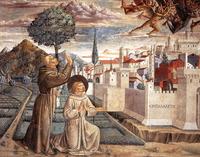
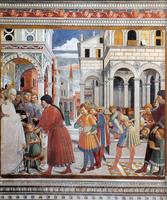
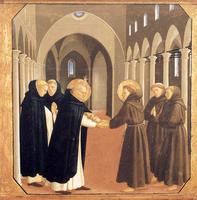
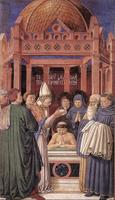
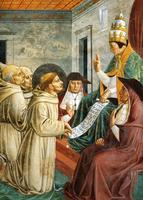
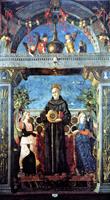
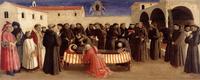
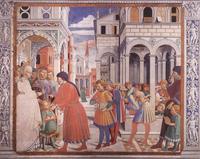
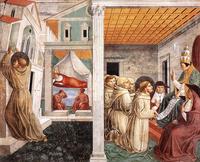
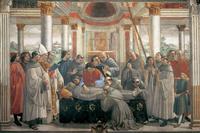
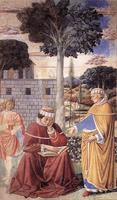
Based solely on the provided facts—that the artwork is "The Parable of the Holy Trinity and the Visit to the Monks of Mount Pisano" by Benozzo Gozzoli, executed in the Early Renaissance style as a religious painting—its significance lies in how it exemplifies the period's hallmark shift toward naturalistic storytelling within a sacred context. Gozzoli was renowned for his ability to weave complex theological narratives into vibrant, detailed landscapes and contemporary settings. This work likely combines a doctrinal parable (the Holy Trinity) with a specific, localized event (the visit to the monks), demonstrating the Early Renaissance interest in making abstract religious truths tangible through familiar, earthly details. The inclusion of Mount Pisano and its monks grounds the divine in the recognizable, reflecting the era's move away from purely iconic, gold-ground depictions toward spatially coherent, human-centered compositions that invite the viewer into the scene. Thus, the painting is significant for its fusion of symbolic theology with the nascent naturalism and perspectival space that define the Early Renaissance.