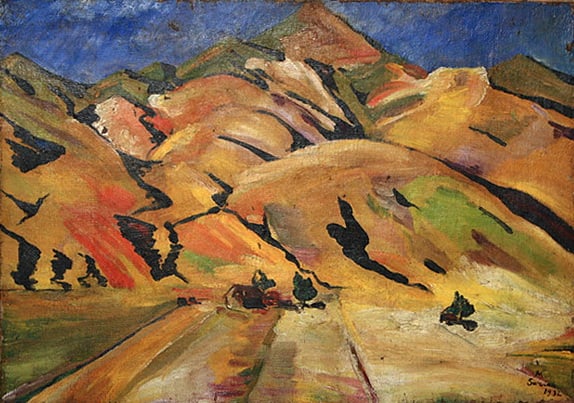
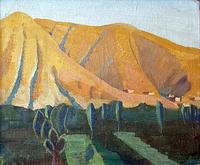
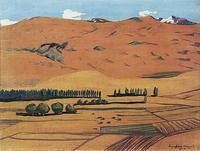
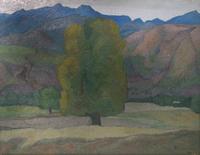
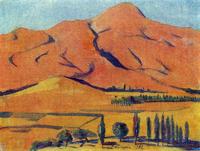
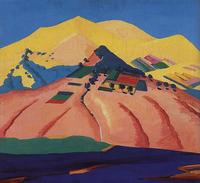
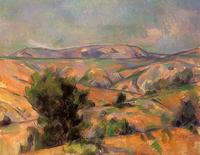
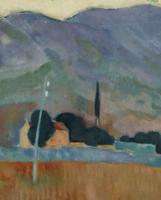
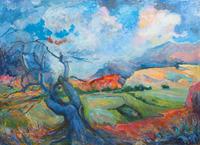
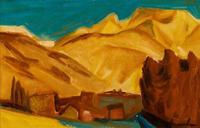
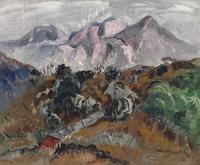
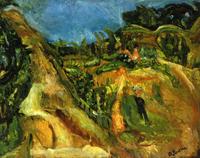
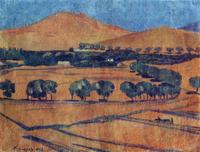
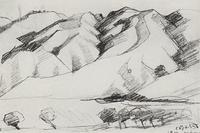
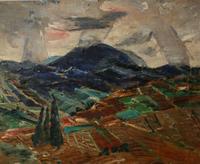
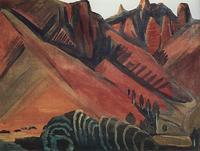
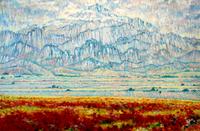
The significance of Evening in the Mountains lies in how Martiros Sarian transforms a conventional landscape into an intensely emotional, Expressionist vision. Rather than depicting a faithful topographical record, Sarian prioritizes mood and subjective experience. In the Expressionist tradition, he likely distorts natural forms—exaggerating the scale or curvature of the mountains—and uses non‑naturalistic, saturated colour to convey the atmospheric drama of dusk. The “evening” setting is crucial: it allows him to explore the tension between fading light and shadow, evoking feelings of solitude, majesty, or even melancholy. As an Expressionist landscape, the work pushes beyond mere scenery to become a psychological state, marking Sarian’s contribution to early 20th‑century modernism where landscape served as a vehicle for inner vision.