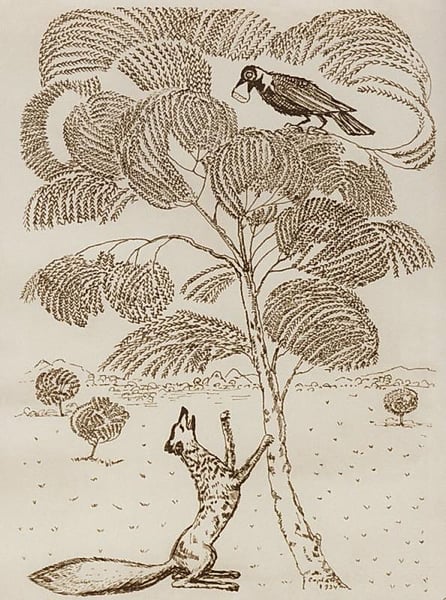
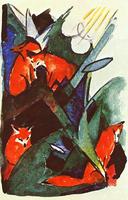
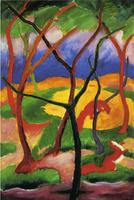
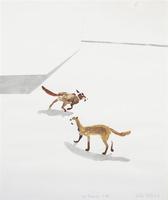
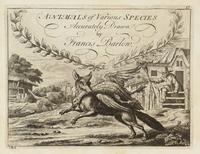
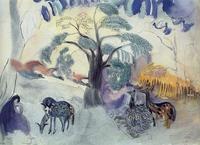
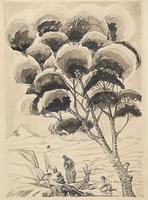
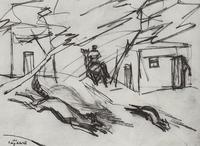
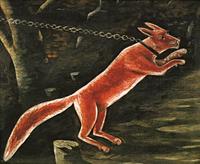
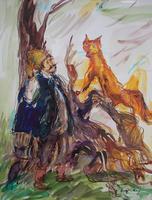
Based solely on the provided facts, the significance of Martiros Sarian’s Illustration for the fable ‘The Crow and the Fox’ lies in its fusion of Expressionist aesthetic with narrative illustration. As an Expressionist work, the piece likely prioritizes emotional intensity over naturalistic representation, using distorted forms, bold colors, and exaggerated gestures to amplify the moral tension of La Fontaine’s fable (or its folk variants). The genre of illustration here is elevated from mere decoration to a vehicle for psychological and symbolic meaning: the crow’s vanity and the fox’s cunning would be rendered not as literal scenes but as heightened, subjective visions of flattery and deceit. This approach aligns with Expressionism’s goal to convey inner experience, making the fable’s timeless lesson resonate on a visceral, rather than purely didactic, level. The artwork thus stands as a notable example of how an avant-garde visual language can reinterpret classic storytelling, merging folk wisdom with modernist emotional depth.