Expertenanalyse zu Martiros Sarians Peasants' dancing
Stil: Naïve Art (Primitivism) · Genre: illustration
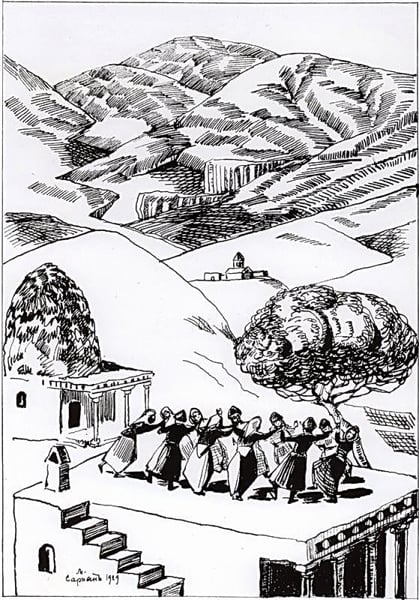
This analysis focuses on the significance of "Peasants' Dancing" by Martiros Sarian within the contexts of Naïve Art (Primitivism) and the genre of illustration.
Expert Analysis:
Martiros Sarian’s "Peasants' Dancing" stands as a vibrant testament to the artist’s lifelong dedication to capturing the spirit of Armenian rural life through the lens of Naïve Art. The work’s significance lies in its masterful fusion of folk authenticity with the formal qualities of Primitivism, while functioning as a cultural illustration that transcends mere decoration.
Key Significance within Naïve Art & Primitivism:
- Celebration of Unmediated Joy: The painting embodies the core tenet of Naïve Art—a deliberate rejection of academic polish in favor of a direct, emotionally charged simplicity. The figures are depicted with a childlike, flattened perspective and bold, unmodulated outlines, which instantly convey the unfettered, rhythmic energy of a dance rather than anatomical precision. This strengthens the viewer's connection to the scene's pure, communal happiness.
- Vibrant, Symbolic Color Palette: Sarian, deeply influenced by the intense light and landscape of Armenia, uses color not as naturalistic description but as an emotional and cultural symbol. The oranges, reds, and deep greens are characteristic of his later, mature style. In this piece, the colors heighten the sense of festivity and earthiness, linking the dancers to the soil and sun—a hallmark of Primitivism’s focus on raw, elemental life.
- Flattened Depth as Cultural Statement: The absence of traditional perspective pushes the figures toward the picture plane, making the dance feel immediate and participatory. This technique, common in Primitivism, strips away the illusion of a separate, objective world and instead presents the scene as a timeless, ritualistic performance—a snapshot of an enduring folk tradition.
Significance as an Illustration:
- Ethnographic and Narrative Function: As an illustration, the work serves a clear narrative purpose: to document and celebrate the ritual of peasant life. It does not aim for photographic realism but rather for a symbolic, uplifting representation. The composition is designed to be "read"—the repetition of dancing figures, the linked hands, and the musical instruments (likely the duduk or zurna implied by the posture) act as visual shorthand for cultural identity. It illustrates the collective, social fabric of the Armenian village, making it a valuable visual record of folk customs.
- Sarian’s Unique Synthesis: Unlike many Western Primitivists (e.g., Gauguin in Tahiti), Sarian was painting his own native culture. This gives "Peasants' Dancing" an authenticity that avoids exoticization. His "naïve" style is a deliberate, sophisticated choice to mirror the directness of folk art itself. Thus, the illustration is not an outsider's view but an insider's loving tribute, elevating everyday peasant joy to the level of iconic, national art.
In conclusion, "Peasants' Dancing" is significant because it perfectly synthesizes the signature visual language of Naïve Art—simplicity, radiant color, and flattened space—with a deeply personal, illustrative documentation of Armenian culture. It stands as a joyful, resilient counterpoint to the upheavals of Sarian’s era, proving that Primitivism could be a powerful tool for cultural preservation and expression of communal identity.
Museum / Gallery
Visuell ähnlich
20 Werke mit ähnlicher Komposition und Farbpalette
Armenian village
Martiros Sarian
Armenian village
Martiros Sarian
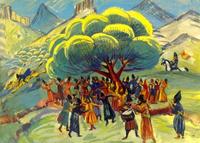
Holiday under the tree
Martiros Sarian
Illumination for the tale by Hovhannes Tumanyan 'Nazar the Brave'
Martiros Sarian
Aparan
Martiros Sarian
Cover of A. Isahakyan's book of poems
Martiros Sarian
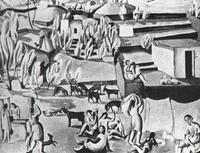
Landscape Near Cadaques
Salvador Dali
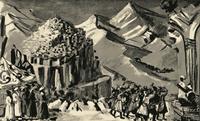
Design for opera by A. Spendiarov 'Almast'
Martiros Sarian
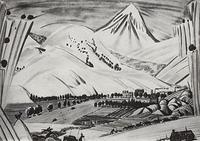
Armenia
Martiros Sarian
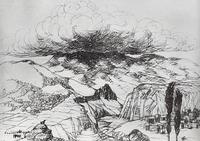
Armenia
Martiros Sarian
Ararat
Martiros Sarian
Skaters on the ice at a farm
Esaias van de Velde
Winter at Cenade
Viorel Marginean
A Café on the Bosphorus
John Frederick Lewis
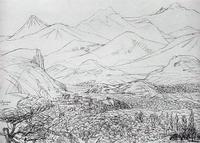
Armenia
Martiros Sarian
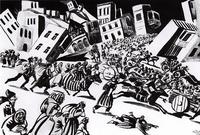
Illustration to Yeghishe Charents' "Country of Nairi" - Escape of nairyans
Martiros Sarian
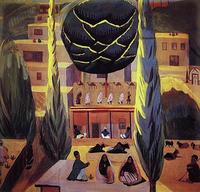
In Persia
Martiros Sarian
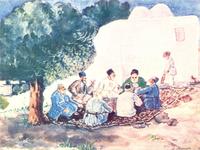
At Baku Summer Cottages
Azim Azimzade
Nablus
David Roberts
Vasilovtsi
Felix Philipp Kanitz